The Input Audit: The Art and Science of Sensory Access

$39.00

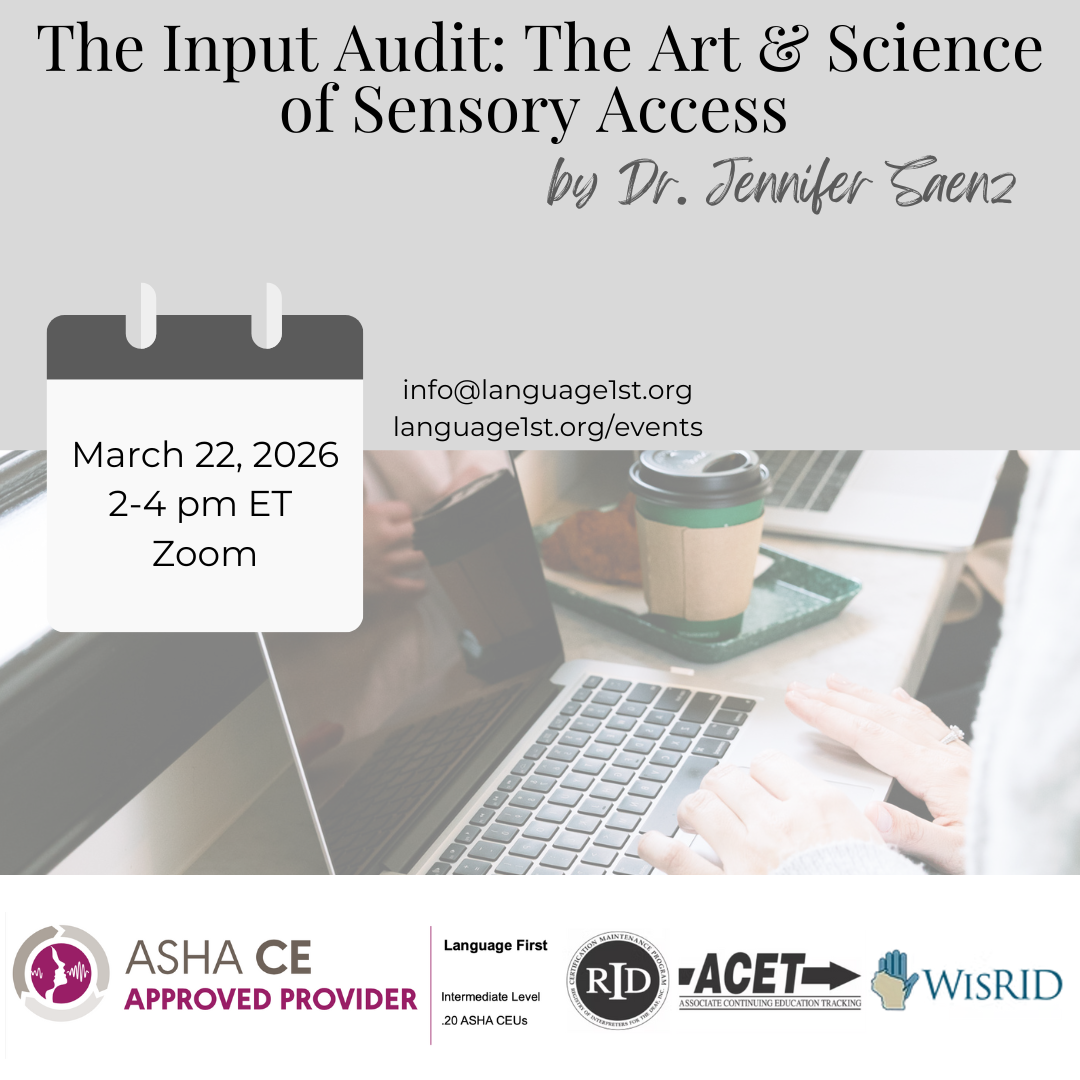
This webinar will be hosted via Zoom for national and international attendees on Sunday, March 22, 2026 from 2:00 - 4:00 pm ET.

Speaker Disclosures:

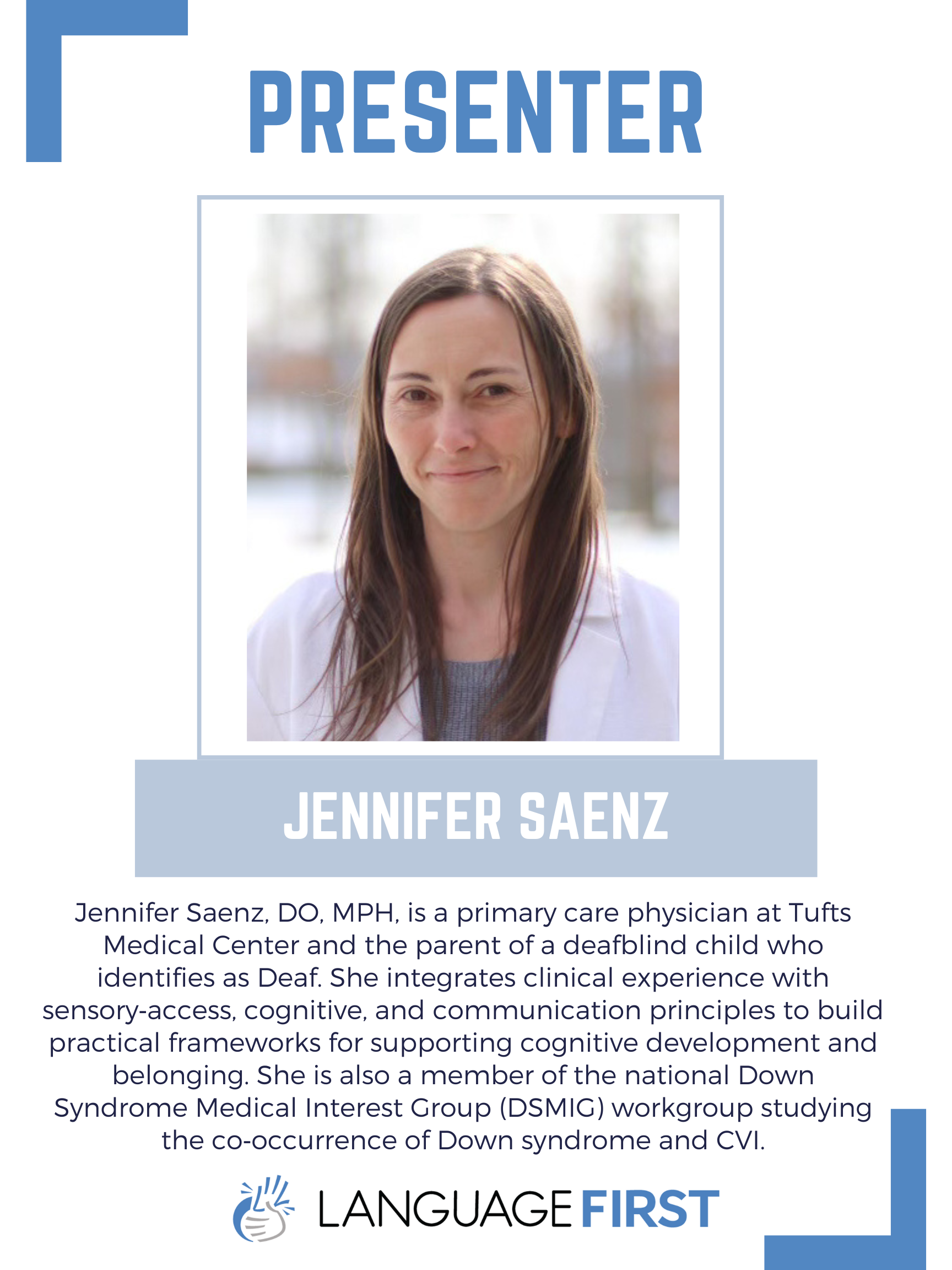
Financial disclosures: Dr. Saenz is receiving an honorarium from Language First for presenting.

Nonfinancial disclosures: Dr. Saenz has no relevant non financial disclosures.

Content disclosures: Dr. Saenz will be discussing her daughter’s development.

Course Description:

This session introduces a practical, sensory‑access–based framework for understanding how children take in, process, and respond to information. Using real cases and visual examples, the presentation examines how combined sensory conditions influence cognitive development, learning, behavior, and identity. Participants will learn how to recognize access‑related barriers, rethink common interpretations of behavior, and apply concrete strategies that support more accurate understanding and meaningful belonging for deaf, blind, and deafblind learners.

Agenda

2:00-2:05: Introduction Session goals and framing

2:05-2:20: Combined Sensory Impact: The Bigger Picture How multiple sensory variables interact to shape access to information and learning2

2:20-2:35: Tip of the Iceberg Visible behaviors and developmental “delays” above the surface vs. sensory‑access failures beneath it

2:35–3:10: Cognitive Scaffolding: The ACCESS Framework Mechanisms of sensory access, anchors, cognitive load reduction, autonomy, and belonging

3:10-3:30: The Input Audit: A practical method for identifying where access breaks down and how to restore meaningful input

3:30-3:45: Conclusion, key takeaways, and application points

3:45-4:00: Q&A

Learner Outcomes:

Participants will be able to:

  1. Reframe behavior & “delay” as access mismatches

  2. Apply the ACCESS framework to analyze input pathways

  3. Use an Input Audit to troubleshoot comprehension

Registration information:

This is a digital purchase only; no physical ticket is provided. A form will populate for you to complete your registration and then your purchase will be added to your cart in the upper right-hand corner of the screen. You will receive an email with instructions on how to participate as well as a Google Calendar invite with the Zoom link one week prior to the event. Registration ends one day prior to the webinar. All registrants will receive a copy of the presenter’s PowerPoint and the presentation recording. Please email info@language1st.org with any questions.

This webinar will be hosted via Zoom for national and international attendees on Sunday, March 22, 2026 from 2:00 - 4:00 pm ET.

Speaker Disclosures:

Financial disclosures: Dr. Saenz is receiving an honorarium from Language First for presenting.

Nonfinancial disclosures: Dr. Saenz has no relevant non financial disclosures.

Content disclosures: Dr. Saenz will be discussing her daughter’s development.

Course Description:

This session introduces a practical, sensory‑access–based framework for understanding how children take in, process, and respond to information. Using real cases and visual examples, the presentation examines how combined sensory conditions influence cognitive development, learning, behavior, and identity. Participants will learn how to recognize access‑related barriers, rethink common interpretations of behavior, and apply concrete strategies that support more accurate understanding and meaningful belonging for deaf, blind, and deafblind learners.

Agenda

2:00-2:05: Introduction Session goals and framing

2:05-2:20: Combined Sensory Impact: The Bigger Picture How multiple sensory variables interact to shape access to information and learning2

2:20-2:35: Tip of the Iceberg Visible behaviors and developmental “delays” above the surface vs. sensory‑access failures beneath it

2:35–3:10: Cognitive Scaffolding: The ACCESS Framework Mechanisms of sensory access, anchors, cognitive load reduction, autonomy, and belonging

3:10-3:30: The Input Audit: A practical method for identifying where access breaks down and how to restore meaningful input

3:30-3:45: Conclusion, key takeaways, and application points

3:45-4:00: Q&A

Learner Outcomes:

Participants will be able to:

  1. Reframe behavior & “delay” as access mismatches

  2. Apply the ACCESS framework to analyze input pathways

  3. Use an Input Audit to troubleshoot comprehension

Registration information:

This is a digital purchase only; no physical ticket is provided. A form will populate for you to complete your registration and then your purchase will be added to your cart in the upper right-hand corner of the screen. You will receive an email with instructions on how to participate as well as a Google Calendar invite with the Zoom link one week prior to the event. Registration ends one day prior to the webinar. All registrants will receive a copy of the presenter’s PowerPoint and the presentation recording. Please email info@language1st.org with any questions.

COntinuing Education:

This event is offered for 0.20 ASHA CEUs. Only participants who attend the live event will receive a certificate of attendance. Participants who attend the entire webinar and fill out the self assessment form will be considered eligible to earn ASHA CEUs.

Accommodations:

This event will be in English with ASL interpreters and captions. Please email info@language1st.org with requests for additional accommodations at least 14 days prior to the event.

course availability:

This course will be available in the Language First Learning Library after the live event is over.

Cancellation/Refund Policy:

Full refunds for webinars and other events are available up to 14 days prior to the event. No refunds are available after that time. If Language First cancels or moves a webinar or event, all participants will be given the options of a.) receiving a full refund; b.) applying the amount paid to another event; c.) transferring their registration to the new date. If a registrant has a complaint or is unsatisfied with a webinar or event, please email info@language1st.org with “complaint” in the subject line.