This webinar will be hosted via Zoom for national and international attendees on Thursday, August 6, 2026 from 5:00 - 7:00 pm ET.
Speaker Disclosures:
Financial disclosures: Erica is receiving an honorarium from Language First for presenting.
Nonfinancial disclosures: Erica has no relevant non financial disclosures.
Course Description:
Language deprivation remains one of the most significant risks facing Deaf and Hard of Hearing children, yet it is often misunderstood or incorrectly attributed to hearing loss itself. This presentation explores the critical role of early language access in supporting cognitive, social-emotional, and academic development. Participants will examine the difference between hearing loss and language deprivation, review current research on early language acquisition, and discuss common misconceptions that can influence decision-making and service delivery. The presentation will also explore the experiences of families following a diagnosis of hearing loss, including information overload, decision-making challenges, and the importance of culturally responsive support. Through the Community Health and Literacy Program (CHLP), a Deaf-led, home-based language access program serving families across Michigan, participants will learn how Deaf mentors, family engagement, and community connections can help support language development and prevent language deprivation. Attendees will leave with practical strategies for promoting language access, supporting families, and fostering collaboration among professionals, Deaf adults, and communities to improve outcomes for Deaf and Hard of Hearing children.
Agenda
5:00-5:10: Introduction, presenter background, and learning objectives
5:10-5:30: Understanding language deprivation and the importance of early language access
5:30-5:50: Research and developmental outcomes, current research on early language access and academic outcomes
5:50-6:10: Family experiences and culturally responsive support and family engagement
6:10-6:35: CHLP case study, why CHLP was created, outcomes, lessons learned, and family success stories
6:35-6:45 Practical strategies and key takeaways, what professionals, families, and communities can do
6:45-7:00: Q&A
Learner Outcomes:
Participants will be able to:
Define language deprivation and distinguish it from hearing loss, including its impact on cognitive, social-emotional, and academic development
Describe the importance of early language access and identify strategies that support language development in Deaf and Hard of Hearing children
Identify practical approaches for supporting families, promoting language access, and fostering collaboration among professionals, Deaf adults, and communities
Registration information:
This is a digital purchase only; no physical ticket is provided. A form will populate for you to complete your registration and then your purchase will be added to your cart in the upper right-hand corner of the screen. You will receive an email with instructions on how to participate as well as a Google Calendar invite with the Zoom link one week prior to the event. Registration ends one day prior to the webinar. All registrants will receive a copy of the presenter’s PowerPoint and the presentation recording. Please email info@language1st.org with any questions.
This webinar will be hosted via Zoom for national and international attendees on Thursday, August 6, 2026 from 5:00 - 7:00 pm ET.
Speaker Disclosures:
Financial disclosures: Erica is receiving an honorarium from Language First for presenting.
Nonfinancial disclosures: Erica has no relevant non financial disclosures.
Course Description:
Language deprivation remains one of the most significant risks facing Deaf and Hard of Hearing children, yet it is often misunderstood or incorrectly attributed to hearing loss itself. This presentation explores the critical role of early language access in supporting cognitive, social-emotional, and academic development. Participants will examine the difference between hearing loss and language deprivation, review current research on early language acquisition, and discuss common misconceptions that can influence decision-making and service delivery. The presentation will also explore the experiences of families following a diagnosis of hearing loss, including information overload, decision-making challenges, and the importance of culturally responsive support. Through the Community Health and Literacy Program (CHLP), a Deaf-led, home-based language access program serving families across Michigan, participants will learn how Deaf mentors, family engagement, and community connections can help support language development and prevent language deprivation. Attendees will leave with practical strategies for promoting language access, supporting families, and fostering collaboration among professionals, Deaf adults, and communities to improve outcomes for Deaf and Hard of Hearing children.
Agenda
5:00-5:10: Introduction, presenter background, and learning objectives
5:10-5:30: Understanding language deprivation and the importance of early language access
5:30-5:50: Research and developmental outcomes, current research on early language access and academic outcomes
5:50-6:10: Family experiences and culturally responsive support and family engagement
6:10-6:35: CHLP case study, why CHLP was created, outcomes, lessons learned, and family success stories
6:35-6:45 Practical strategies and key takeaways, what professionals, families, and communities can do
6:45-7:00: Q&A
Learner Outcomes:
Participants will be able to:
Define language deprivation and distinguish it from hearing loss, including its impact on cognitive, social-emotional, and academic development
Describe the importance of early language access and identify strategies that support language development in Deaf and Hard of Hearing children
Identify practical approaches for supporting families, promoting language access, and fostering collaboration among professionals, Deaf adults, and communities
Registration information:
This is a digital purchase only; no physical ticket is provided. A form will populate for you to complete your registration and then your purchase will be added to your cart in the upper right-hand corner of the screen. You will receive an email with instructions on how to participate as well as a Google Calendar invite with the Zoom link one week prior to the event. Registration ends one day prior to the webinar. All registrants will receive a copy of the presenter’s PowerPoint and the presentation recording. Please email info@language1st.org with any questions.

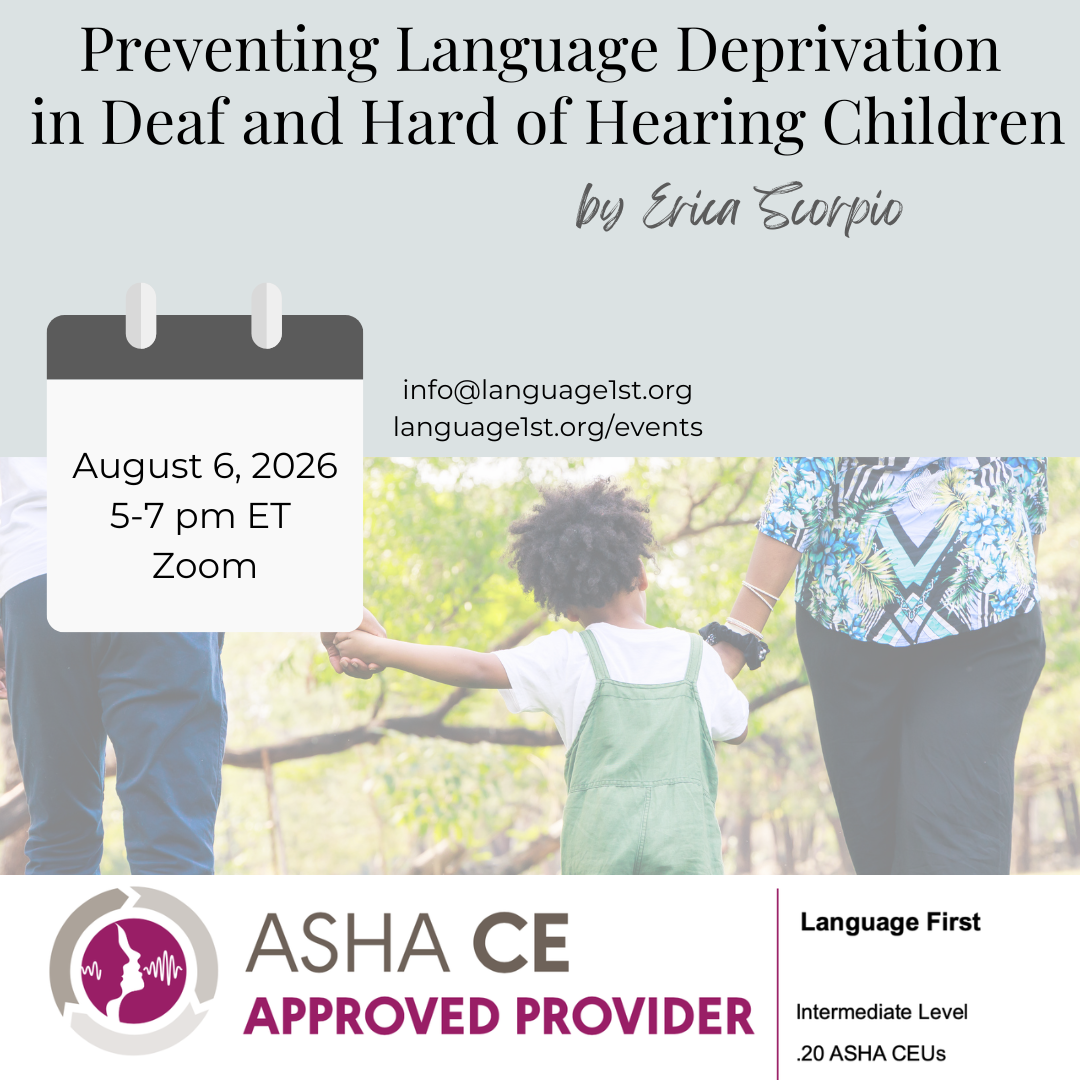 Image 1 of 2
 Image 2 of 2