This webinar will be hosted via Zoom for national and international attendees on Thursday, March 12, 2026 from 6:00 - 8:00 pm ET.
Speaker Disclosures:
Financial disclosures: Dr. Wilson is receiving an honorarium from Language First for presenting.
Nonfinancial disclosures: Dr. Wilson is the owner of Wilson Clinical.
Course Description:
This session will focus on language deprivation in Deaf, Hard of Hearing, DeafBlind (DHHDB) youth and how it impacts behavior, emotional regulation, learning, and classroom safety. The presentation is designed to be practical, supportive, and directly applicable to school settings, with a strong emphasis on what educators can do differently to better support students affected by language deprivation. Participants will learn how language deprivation can present in the classroom as irritability, shutdown, sensory overload, anxiety, or behavioral escalation—and why these behaviors are often misunderstood or mislabeled as defiance or noncompliance. Through real-world case examples, the session will help staff reframe behavior as communication and understand the neurodevelopmental and emotional consequences of inconsistent or delayed language access. In the latter portion of the session, participants will be introduced to the broader continuum of care for Deaf youth. This includes a high-level, educator-appropriate discussion of how chronic dysregulation related to language deprivation can affect the nervous system, and when medical or psychiatric supports may be considered as a complement to—never a replacement for—educational and language-based interventions. This section is intended to increase understanding, reduce fear or misconceptions, and support collaboration with families and healthcare providers. Throughout the session, emphasis will be placed on equity, safety, and access, helping staff understand their critical role in mitigating the long-term impacts of language deprivation while fostering learning, regulation, and well-being for Deaf students.
Agenda
6:00-6:10: Welcome, Objectives, & Framing the Session
6:10-6:30: What Is Language Deprivation? Definition and key concepts Language deprivation vs. language delay; Neurodevelopmental and emotional impacts of inconsistent language access
6:30-6:55: How Language Deprivation Presents in the Classroom Behavior as communication Irritability, shutdown, sensory overload, anxiety, and escalation; Common misinterpretations of behavior in school settings
6:55-7:20: Case Examples & Functional Reframing; Real-world case example(s); Identifying underlying communication, sensory, and regulation needs
7:20-7:40: Practical Strategies & Classroom Applications; Visual structure and predictability; Co-regulation and emotional safety
7:40-7:50: The Broader Continuum of Care; How chronic dysregulation affects learning and regulation
7:50-8:00: Q&A, discussion
Learner Outcomes:
Participants will be able to:
Define language deprivation and describe how it differs from language delay, including its neurodevelopmental, emotional, and behavioral impacts on Deaf, Hard of Hearing, DeafBlind (DHHDB) students.
Identify common classroom behaviors associated with language deprivation and reframe those behaviors as communication and regulation needs, rather than defiance or noncompliance.
Apply practical, evidence-informed strategies to support students affected by language deprivation, including visual structure, co-regulation techniques, and effective collaboration with SLPs, OTs, and other support providers.
Registration information:
This is a digital purchase only; no physical ticket is provided. A form will populate for you to complete your registration and then your purchase will be added to your cart in the upper right-hand corner of the screen. You will receive an email with instructions on how to participate as well as a Google Calendar invite with the Zoom link one week prior to the event. Registration ends one day prior to the webinar. All registrants will receive a copy of the presenter’s PowerPoint and the presentation recording. Please email info@language1st.org with any questions.
This webinar will be hosted via Zoom for national and international attendees on Thursday, March 12, 2026 from 6:00 - 8:00 pm ET.
Speaker Disclosures:
Financial disclosures: Dr. Wilson is receiving an honorarium from Language First for presenting.
Nonfinancial disclosures: Dr. Wilson is the owner of Wilson Clinical.
Course Description:
This session will focus on language deprivation in Deaf, Hard of Hearing, DeafBlind (DHHDB) youth and how it impacts behavior, emotional regulation, learning, and classroom safety. The presentation is designed to be practical, supportive, and directly applicable to school settings, with a strong emphasis on what educators can do differently to better support students affected by language deprivation. Participants will learn how language deprivation can present in the classroom as irritability, shutdown, sensory overload, anxiety, or behavioral escalation—and why these behaviors are often misunderstood or mislabeled as defiance or noncompliance. Through real-world case examples, the session will help staff reframe behavior as communication and understand the neurodevelopmental and emotional consequences of inconsistent or delayed language access. In the latter portion of the session, participants will be introduced to the broader continuum of care for Deaf youth. This includes a high-level, educator-appropriate discussion of how chronic dysregulation related to language deprivation can affect the nervous system, and when medical or psychiatric supports may be considered as a complement to—never a replacement for—educational and language-based interventions. This section is intended to increase understanding, reduce fear or misconceptions, and support collaboration with families and healthcare providers. Throughout the session, emphasis will be placed on equity, safety, and access, helping staff understand their critical role in mitigating the long-term impacts of language deprivation while fostering learning, regulation, and well-being for Deaf students.
Agenda
6:00-6:10: Welcome, Objectives, & Framing the Session
6:10-6:30: What Is Language Deprivation? Definition and key concepts Language deprivation vs. language delay; Neurodevelopmental and emotional impacts of inconsistent language access
6:30-6:55: How Language Deprivation Presents in the Classroom Behavior as communication Irritability, shutdown, sensory overload, anxiety, and escalation; Common misinterpretations of behavior in school settings
6:55-7:20: Case Examples & Functional Reframing; Real-world case example(s); Identifying underlying communication, sensory, and regulation needs
7:20-7:40: Practical Strategies & Classroom Applications; Visual structure and predictability; Co-regulation and emotional safety
7:40-7:50: The Broader Continuum of Care; How chronic dysregulation affects learning and regulation
7:50-8:00: Q&A, discussion
Learner Outcomes:
Participants will be able to:
Define language deprivation and describe how it differs from language delay, including its neurodevelopmental, emotional, and behavioral impacts on Deaf, Hard of Hearing, DeafBlind (DHHDB) students.
Identify common classroom behaviors associated with language deprivation and reframe those behaviors as communication and regulation needs, rather than defiance or noncompliance.
Apply practical, evidence-informed strategies to support students affected by language deprivation, including visual structure, co-regulation techniques, and effective collaboration with SLPs, OTs, and other support providers.
Registration information:
This is a digital purchase only; no physical ticket is provided. A form will populate for you to complete your registration and then your purchase will be added to your cart in the upper right-hand corner of the screen. You will receive an email with instructions on how to participate as well as a Google Calendar invite with the Zoom link one week prior to the event. Registration ends one day prior to the webinar. All registrants will receive a copy of the presenter’s PowerPoint and the presentation recording. Please email info@language1st.org with any questions.

 Image 1 of 2
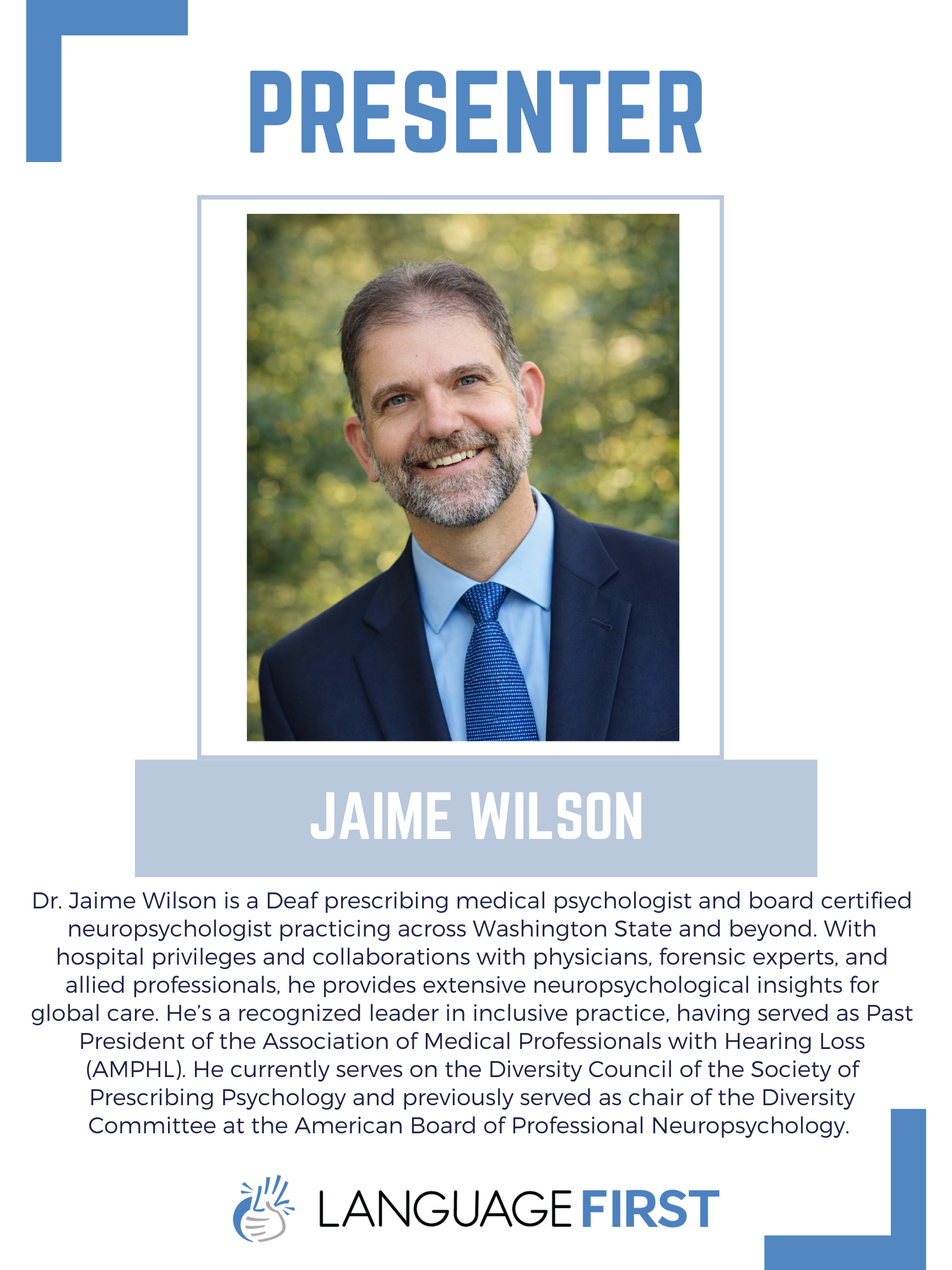 Image 2 of 2
