This webinar will be hosted via Zoom for national and international attendees on Sunday, August 16, 2026 from 4:00 - 6:00 pm ET.
Speaker Disclosures:
Financial disclosures: Steven and Kandice are receiving honorariums from Language First for presenting. Dr. Farmer is the owner of DeafEd Dynamics.
Nonfinancial disclosures: Steven and Kandice have no relevant nonfinancial disclosures.
Content disclosure: This presentation will focus on TBRI®.
Course Description:
Deaf and Hard of Hearing (DHH) individuals experience Adverse Childhood Experiences (ACEs) at twice the rate of the general population (NCTSN, 2006; Anderson et al, 2016). Compounding risk factors contribute to the relational trauma experienced by DHH individuals, including language development, caregiver grief, access to care and community, timeliness of diagnosis, multiple transitions, and overall family stress (NCTSN, 2006; Rosenzwieg, 2023; Anderson et al, 2016). Additionally, DHH individuals have other intersectionalities that increase the risk of experiencing early relational trauma, such as low socio-economic status, being minorities, being in foster care, being adopted, and being immigrants (Anderson et al, 2016). Toxic stress caused by relational trauma impacts the 5 Bs: Brain, Body, Biology, Behavior, and Beliefs (KPICD, 2023). Research has shown that language deprivation has similar effects (Anderson et al, 2017; Hall, 2017; Rosenzweig, 2023; Signs for Hope, 2025). As professionals working with DHH children, it is imperative to act as investigators to determine the needs behind the behavior and to establish an environment in which children impacted by trauma and language deprivation gain a voice.
Felt-safety is established through implementing environmental changes and using engagement strategies such as predictable routines with visuals, transition warnings, connected rituals, eye contact, nurturing touch, and playful engagement. Maintaining connection and attunement to the child’s needs helps professionals meet needs, preventing challenging behaviors. Regulation is mitigated through sensory-integrative activities and explicitly taught for mental well-being. TBRI® is a trauma-informed, attachment-based practice that is effective with children who have experienced severe and chronic trauma in early childhood. The practices are grounded in years of experience, neuroscience research, and attachment science, which have a profound impact on all individuals. This presentation will specifically discuss the practice of TBRI® with DHH children. In conclusion, we will review available resources to gain a deeper understanding of trauma-informed, attachment-based practices, facilitating further learning.
Agenda
4:00-4:15: Introduction & why we do this work
4:15-4:30: Prevalence of Trauma among DHH populations
4:30-4:45: Impacts of trauma on the brain, body, biology, behavior, and beliefs
4:45-5:00: Intro to TBRI® and Three Pillars of Trauma-Wise Care
5:5:45: Overview & Applications of TBRI® Principles
5:45-6:00: Q&A
Learner Outcomes:
Participants will be able to:
State the intersection of trauma and deafness.
Explain the impact of trauma experienced by abused and language-deprived Deaf/Hard of Hearing (DHH) children.
Apply trauma-informed strategies to support children throughout their healing process and language development
Registration information:
This is a digital purchase only; no physical ticket is provided. A form will populate for you to complete your registration and then your purchase will be added to your cart in the upper right-hand corner of the screen. You will receive an email with instructions on how to participate as well as a Google Calendar invite with the Zoom link one week prior to the event. Registration ends one day prior to the webinar. All registrants will receive a copy of the presenter’s PowerPoint and the presentation recording. Please email info@language1st.org with any questions.
This webinar will be hosted via Zoom for national and international attendees on Sunday, August 16, 2026 from 4:00 - 6:00 pm ET.
Speaker Disclosures:
Financial disclosures: Steven and Kandice are receiving honorariums from Language First for presenting. Dr. Farmer is the owner of DeafEd Dynamics.
Nonfinancial disclosures: Steven and Kandice have no relevant nonfinancial disclosures.
Content disclosure: This presentation will focus on TBRI®.
Course Description:
Deaf and Hard of Hearing (DHH) individuals experience Adverse Childhood Experiences (ACEs) at twice the rate of the general population (NCTSN, 2006; Anderson et al, 2016). Compounding risk factors contribute to the relational trauma experienced by DHH individuals, including language development, caregiver grief, access to care and community, timeliness of diagnosis, multiple transitions, and overall family stress (NCTSN, 2006; Rosenzwieg, 2023; Anderson et al, 2016). Additionally, DHH individuals have other intersectionalities that increase the risk of experiencing early relational trauma, such as low socio-economic status, being minorities, being in foster care, being adopted, and being immigrants (Anderson et al, 2016). Toxic stress caused by relational trauma impacts the 5 Bs: Brain, Body, Biology, Behavior, and Beliefs (KPICD, 2023). Research has shown that language deprivation has similar effects (Anderson et al, 2017; Hall, 2017; Rosenzweig, 2023; Signs for Hope, 2025). As professionals working with DHH children, it is imperative to act as investigators to determine the needs behind the behavior and to establish an environment in which children impacted by trauma and language deprivation gain a voice.
Felt-safety is established through implementing environmental changes and using engagement strategies such as predictable routines with visuals, transition warnings, connected rituals, eye contact, nurturing touch, and playful engagement. Maintaining connection and attunement to the child’s needs helps professionals meet needs, preventing challenging behaviors. Regulation is mitigated through sensory-integrative activities and explicitly taught for mental well-being. TBRI® is a trauma-informed, attachment-based practice that is effective with children who have experienced severe and chronic trauma in early childhood. The practices are grounded in years of experience, neuroscience research, and attachment science, which have a profound impact on all individuals. This presentation will specifically discuss the practice of TBRI® with DHH children. In conclusion, we will review available resources to gain a deeper understanding of trauma-informed, attachment-based practices, facilitating further learning.
Agenda
4:00-4:15: Introduction & why we do this work
4:15-4:30: Prevalence of Trauma among DHH populations
4:30-4:45: Impacts of trauma on the brain, body, biology, behavior, and beliefs
4:45-5:00: Intro to TBRI® and Three Pillars of Trauma-Wise Care
5:5:45: Overview & Applications of TBRI® Principles
5:45-6:00: Q&A
Learner Outcomes:
Participants will be able to:
State the intersection of trauma and deafness.
Explain the impact of trauma experienced by abused and language-deprived Deaf/Hard of Hearing (DHH) children.
Apply trauma-informed strategies to support children throughout their healing process and language development
Registration information:
This is a digital purchase only; no physical ticket is provided. A form will populate for you to complete your registration and then your purchase will be added to your cart in the upper right-hand corner of the screen. You will receive an email with instructions on how to participate as well as a Google Calendar invite with the Zoom link one week prior to the event. Registration ends one day prior to the webinar. All registrants will receive a copy of the presenter’s PowerPoint and the presentation recording. Please email info@language1st.org with any questions.

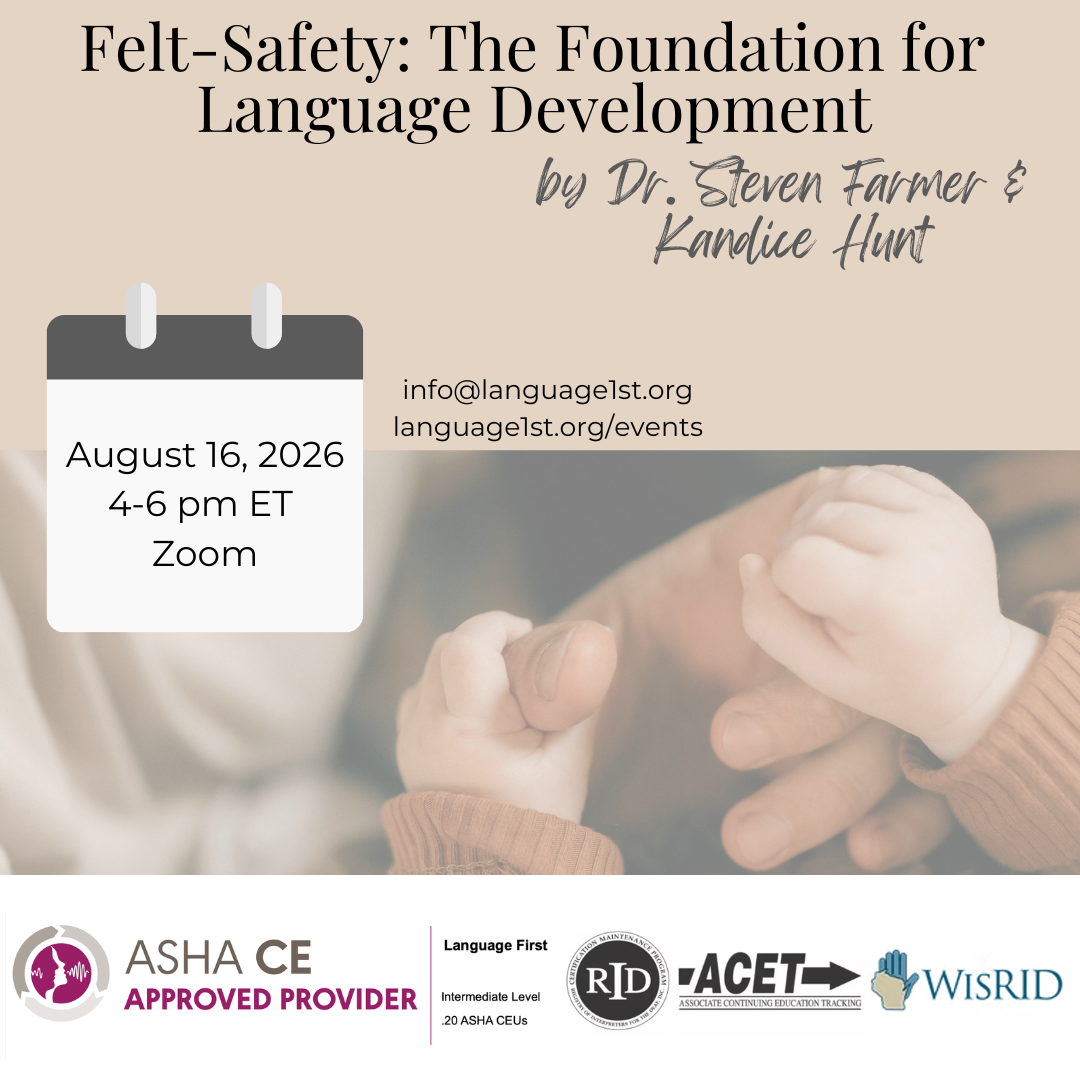 Image 1 of 3
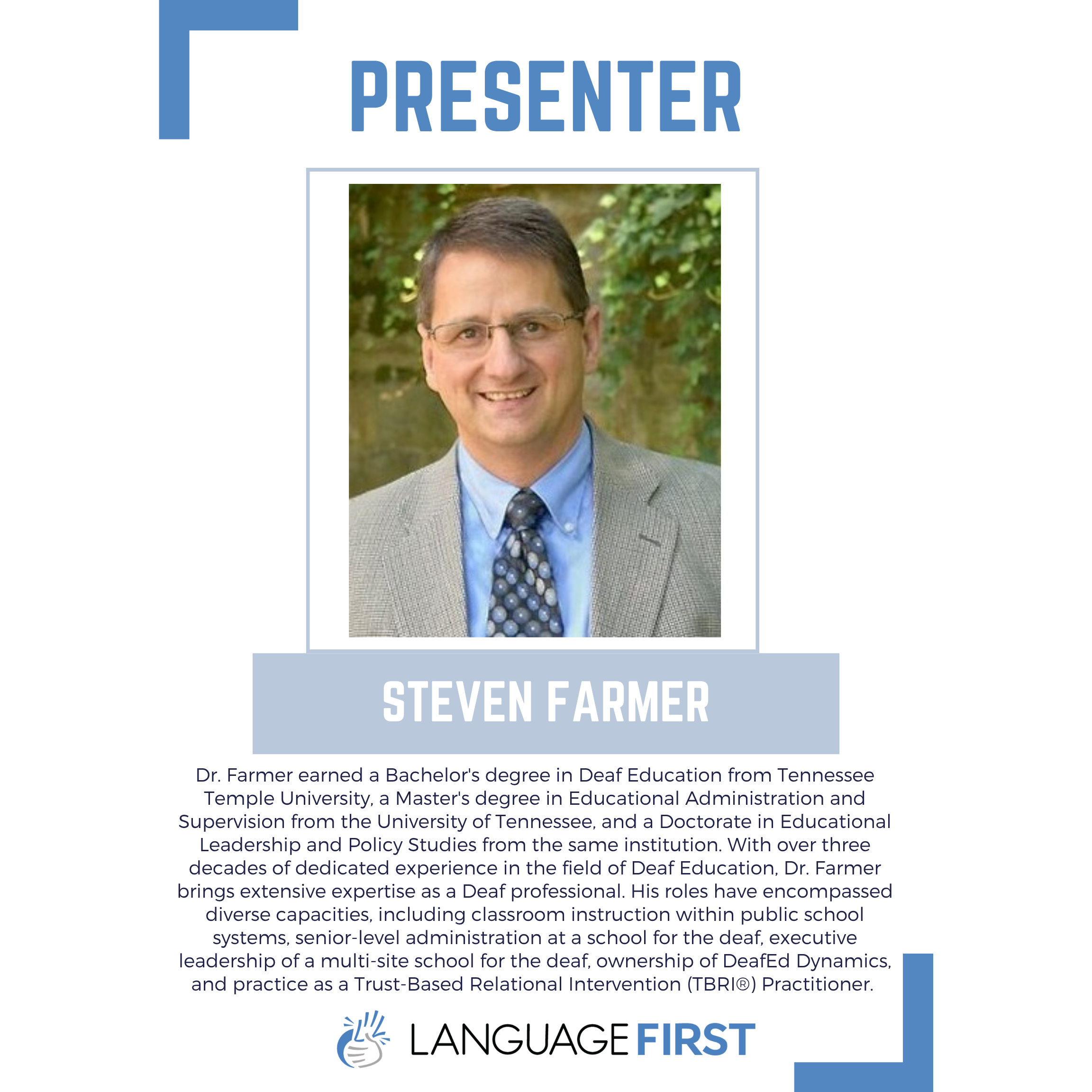 Image 2 of 3
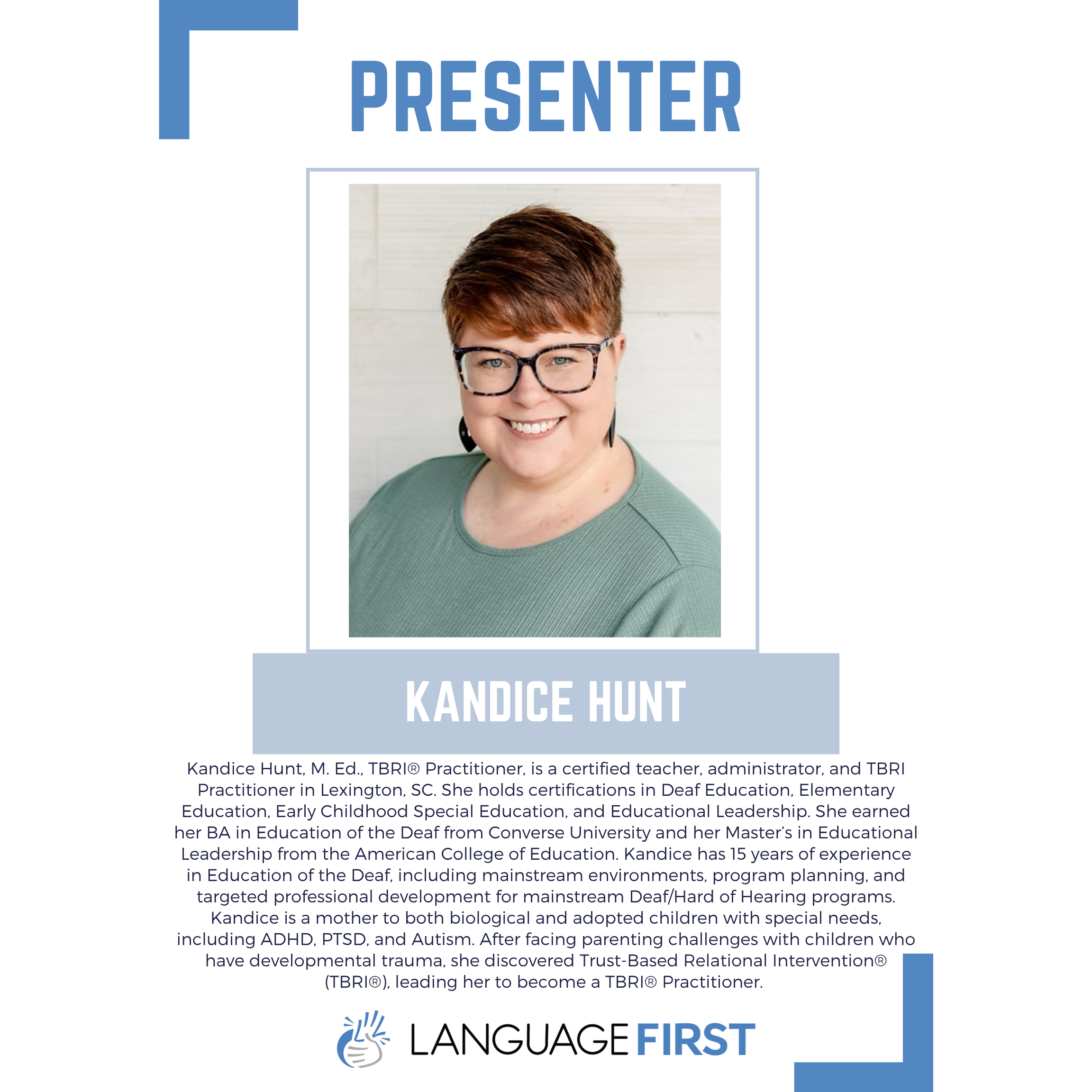 Image 3 of 3
