The first-ever CISIGN Conference will be held virtually, on Zoom, on January 31, 2027 from 9:00 am - 4:00 pm. Find out more about our CISIGN Campaign here.
SCHEDULE
Sunday, January 31
9-9:30 | Welcome, Introduction to the CISIGN Campaign
9:30-10:30 | Dr. Kimberly Ofori-Sanzo, Dr. Michelle Veyvoda, & Dr. Amanda Howerton-Fox, The Science of Cochlear Implants and Early Language Development
Session description: Cochlear implants have provided auditory stimulation for some deaf children, but they have not eliminated the need to ensure complete and accessible language acquisition. This presentation reviews current research on cochlear implant outcomes, variability in auditory access, language development, and brain plasticity, while examining persistent misconceptions surrounding spoken language outcomes and signed language exposure. Participants will discuss current controversies in cochlear implant counseling and intervention and consider the ethical responsibility of professionals to prioritize complete language access for every deaf child. The session concludes with practical recommendations and a call to action for clinicians, educators, and early intervention providers.
Agenda:
9:30-9:45: Current research and outcomes for cochlear implants
9:45-10:00: Language development, brain science, and neuroplasticity
10:00-10:10: Evidence for early ASL-English bilingualism
10:10-10:20: Considerations for professionals
10:20-10:30: Q&A
Learner objectives:
Participants will be able to:
Describe current research regarding language and developmental outcomes for deaf children with cochlear implants.
Explain how brain development, neuroplasticity, and sensitive periods influence language acquisition in children with cochlear implants.
Discuss the rationale for an ASL-English bimodal bilingual approach for young deaf children with cochlear implants.
Speaker disclosures: Dr. Veyvoda and Dr. Howerton-Fox are receiving honorariums from Language First for presenting. Dr. Ofori-Sanzo is the owner and founder of Language First.
11-12 pm | Dr. Sarah Sparks, When Communication Plans Aren't Enough: Developing Multimodal Communication Agility
Session description: Communication planning is a key aspect of overall educational planning for DHH students. School-based team members create individualized communication plans documenting language(s), mode(s), hearing technologies, and various tools that DHH students need throughout the school day for communication. But are these plans enough to enable robust language and communication access at school? And more importantly, in life? Why does communication planning often fail to deliver on its intended goal of consistent access, and what can we do to change that? This presentation will address these questions and propose strategies for building DHH students' multimodal communication agility.
Agenda:
11:00-11:05: Introduction
11:05-11:20: Communication Planning and Its Pitfalls, with Examples
11:20-11:40: What Is Multimodal Communication Agility? with Examples
11:40-11:50: How to Build Multimodal Communication Agility
11:50-12:00: Conclusion and Questions
Learner objectives:
Participants will be able to:
Define the term "multimodal communication agility."
Describe at least 3 pitfalls of communication planning and 3 solutions for these problems.
Apply the concept of multimodal communication agility to case examples of DHH students.
Speaker disclosures: Dr. Sparks is a full-time employee of Baltimore City Public Schools, an adjunct instructor for Gallaudet University, Boston University, A.T. Still University of Health Sciences, and Flagler College. She is the founder of Audiology Outside the Box, a member of ASHA, AAA (Accessibility Task Force Chair), and EAA (VP of Online Communications) as well as the DC Speech-Language Hearing Association (CE Administrator) and the Maryland Speech-Language Hearing Association (Director of Audiology). She is receiving an honorarium from Language First for presenting.
LUNCH
1-2 pm | Sara Miller, Listening and Signing: A Cochlear Implant User's Perspective
Session description:
Agenda:
1:00-1:10: Personal background and hearing history
1:10-1:25: Life with a cochlear implant, expectations versus reality, what the implant does and does not provide
1:25-1:40: How sign language changed communication, identity, relationships, and access
1:40-1:50: What professionals and families should know, common misconceptions, advice for supporting deaf children today
1:50-2:00: Q&A
Learner objectives:
Participants will be able to:
Describe Sara’s lived experience as a cochlear implant user (both the upsides/downsides).
Explain why access to ASL can remain valuable for deaf individuals with cochlear implants.
State how lived experience can complement research evidence when making family-centered recommendations about communication and language development.
Speaker disclosures: Sara is receiving an honorarium from Language First for presenting. She has no relevant nonfinancial disclosures.
2:30-3:30 pm | Dr. Marie Coppola, Language is Central: Early Access to Signed or Spoken Language Promotes Age-Appropriate Cognitive Development
Session description: This large study of 404 deaf, hard of hearing, and hearing children (ages 3–10) tested how language modality (signed vs. spoken) and timing of language access (from birth vs. later) affect cognitive and academic development. Across nearly all measured skills—vocabulary, counting, executive function, and even nonverbal tasks—timing of access mattered far more than modality. Children exposed to language from birth, whether ASL or English, showed comparable outcomes, underscoring the need for early, fully accessible language input alongside any hearing technology.
Agenda:
2:30-2:45 Introduction, review of number development in hearing children who have full access to language from birth, study design
2:45-2:55: Results: Development of foundational number concepts in deaf, hard of hearing, and hearing children
2:55-3:05: Results: Mapping between different representations of quantity (signed/spoken words, Arabic numerals, objects)
3:05-3:10: Results: Mathematic calculation fluency
3:10-3:15: Results: “Nonlinguistic” tasks
3:15-3:30: Q&A
Learner objectives:
Participants will be able to:
Explain the evidence that timing of language access — not language modality or hearing status — predicts cognitive and academic outcomes.
Identify why cochlear implantation alone cannot guarantee timely language access, and describe the risk this poses during the candidacy-to-activation period.
Apply the study's findings to counsel families and design interventions that support bilingual (signed + spoken) language exposure from birth.
Speaker disclosures: Dr. Coppola receives a salary from the University of Connecticut. Her views on promoting early access to language are based in scientific evidence and lifelong experience in the deaf community, as a CODA.
This is a digital purchase only; no physical ticket is provided. A form will populate for you to complete your registration and then your purchase will be added to your cart in the upper right-hand corner of the screen. Please email info@language1st.org with any questions.
The first-ever CISIGN Conference will be held virtually, on Zoom, on January 31, 2027 from 9:00 am - 4:00 pm. Find out more about our CISIGN Campaign here.
SCHEDULE
Sunday, January 31
9-9:30 | Welcome, Introduction to the CISIGN Campaign
9:30-10:30 | Dr. Kimberly Ofori-Sanzo, Dr. Michelle Veyvoda, & Dr. Amanda Howerton-Fox, The Science of Cochlear Implants and Early Language Development
Session description: Cochlear implants have provided auditory stimulation for some deaf children, but they have not eliminated the need to ensure complete and accessible language acquisition. This presentation reviews current research on cochlear implant outcomes, variability in auditory access, language development, and brain plasticity, while examining persistent misconceptions surrounding spoken language outcomes and signed language exposure. Participants will discuss current controversies in cochlear implant counseling and intervention and consider the ethical responsibility of professionals to prioritize complete language access for every deaf child. The session concludes with practical recommendations and a call to action for clinicians, educators, and early intervention providers.
Agenda:
9:30-9:45: Current research and outcomes for cochlear implants
9:45-10:00: Language development, brain science, and neuroplasticity
10:00-10:10: Evidence for early ASL-English bilingualism
10:10-10:20: Considerations for professionals
10:20-10:30: Q&A
Learner objectives:
Participants will be able to:
Describe current research regarding language and developmental outcomes for deaf children with cochlear implants.
Explain how brain development, neuroplasticity, and sensitive periods influence language acquisition in children with cochlear implants.
Discuss the rationale for an ASL-English bimodal bilingual approach for young deaf children with cochlear implants.
Speaker disclosures: Dr. Veyvoda and Dr. Howerton-Fox are receiving honorariums from Language First for presenting. Dr. Ofori-Sanzo is the owner and founder of Language First.
11-12 pm | Dr. Sarah Sparks, When Communication Plans Aren't Enough: Developing Multimodal Communication Agility
Session description: Communication planning is a key aspect of overall educational planning for DHH students. School-based team members create individualized communication plans documenting language(s), mode(s), hearing technologies, and various tools that DHH students need throughout the school day for communication. But are these plans enough to enable robust language and communication access at school? And more importantly, in life? Why does communication planning often fail to deliver on its intended goal of consistent access, and what can we do to change that? This presentation will address these questions and propose strategies for building DHH students' multimodal communication agility.
Agenda:
11:00-11:05: Introduction
11:05-11:20: Communication Planning and Its Pitfalls, with Examples
11:20-11:40: What Is Multimodal Communication Agility? with Examples
11:40-11:50: How to Build Multimodal Communication Agility
11:50-12:00: Conclusion and Questions
Learner objectives:
Participants will be able to:
Define the term "multimodal communication agility."
Describe at least 3 pitfalls of communication planning and 3 solutions for these problems.
Apply the concept of multimodal communication agility to case examples of DHH students.
Speaker disclosures: Dr. Sparks is a full-time employee of Baltimore City Public Schools, an adjunct instructor for Gallaudet University, Boston University, A.T. Still University of Health Sciences, and Flagler College. She is the founder of Audiology Outside the Box, a member of ASHA, AAA (Accessibility Task Force Chair), and EAA (VP of Online Communications) as well as the DC Speech-Language Hearing Association (CE Administrator) and the Maryland Speech-Language Hearing Association (Director of Audiology). She is receiving an honorarium from Language First for presenting.
LUNCH
1-2 pm | Sara Miller, Listening and Signing: A Cochlear Implant User's Perspective
Session description:
Agenda:
1:00-1:10: Personal background and hearing history
1:10-1:25: Life with a cochlear implant, expectations versus reality, what the implant does and does not provide
1:25-1:40: How sign language changed communication, identity, relationships, and access
1:40-1:50: What professionals and families should know, common misconceptions, advice for supporting deaf children today
1:50-2:00: Q&A
Learner objectives:
Participants will be able to:
Describe Sara’s lived experience as a cochlear implant user (both the upsides/downsides).
Explain why access to ASL can remain valuable for deaf individuals with cochlear implants.
State how lived experience can complement research evidence when making family-centered recommendations about communication and language development.
Speaker disclosures: Sara is receiving an honorarium from Language First for presenting. She has no relevant nonfinancial disclosures.
2:30-3:30 pm | Dr. Marie Coppola, Language is Central: Early Access to Signed or Spoken Language Promotes Age-Appropriate Cognitive Development
Session description: This large study of 404 deaf, hard of hearing, and hearing children (ages 3–10) tested how language modality (signed vs. spoken) and timing of language access (from birth vs. later) affect cognitive and academic development. Across nearly all measured skills—vocabulary, counting, executive function, and even nonverbal tasks—timing of access mattered far more than modality. Children exposed to language from birth, whether ASL or English, showed comparable outcomes, underscoring the need for early, fully accessible language input alongside any hearing technology.
Agenda:
2:30-2:45 Introduction, review of number development in hearing children who have full access to language from birth, study design
2:45-2:55: Results: Development of foundational number concepts in deaf, hard of hearing, and hearing children
2:55-3:05: Results: Mapping between different representations of quantity (signed/spoken words, Arabic numerals, objects)
3:05-3:10: Results: Mathematic calculation fluency
3:10-3:15: Results: “Nonlinguistic” tasks
3:15-3:30: Q&A
Learner objectives:
Participants will be able to:
Explain the evidence that timing of language access — not language modality or hearing status — predicts cognitive and academic outcomes.
Identify why cochlear implantation alone cannot guarantee timely language access, and describe the risk this poses during the candidacy-to-activation period.
Apply the study's findings to counsel families and design interventions that support bilingual (signed + spoken) language exposure from birth.
Speaker disclosures: Dr. Coppola receives a salary from the University of Connecticut. Her views on promoting early access to language are based in scientific evidence and lifelong experience in the deaf community, as a CODA.
This is a digital purchase only; no physical ticket is provided. A form will populate for you to complete your registration and then your purchase will be added to your cart in the upper right-hand corner of the screen. Please email info@language1st.org with any questions.

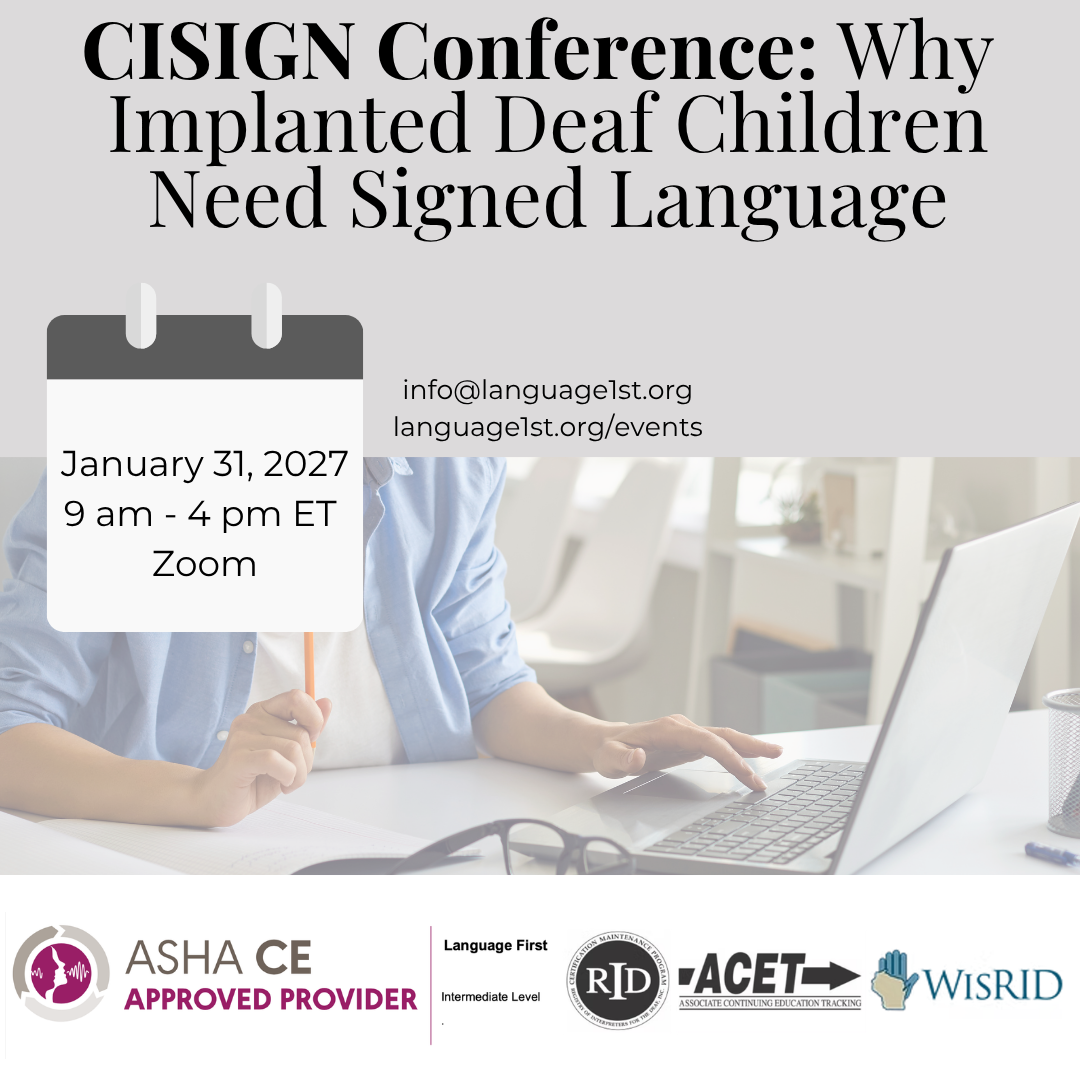 Image 1 of 9
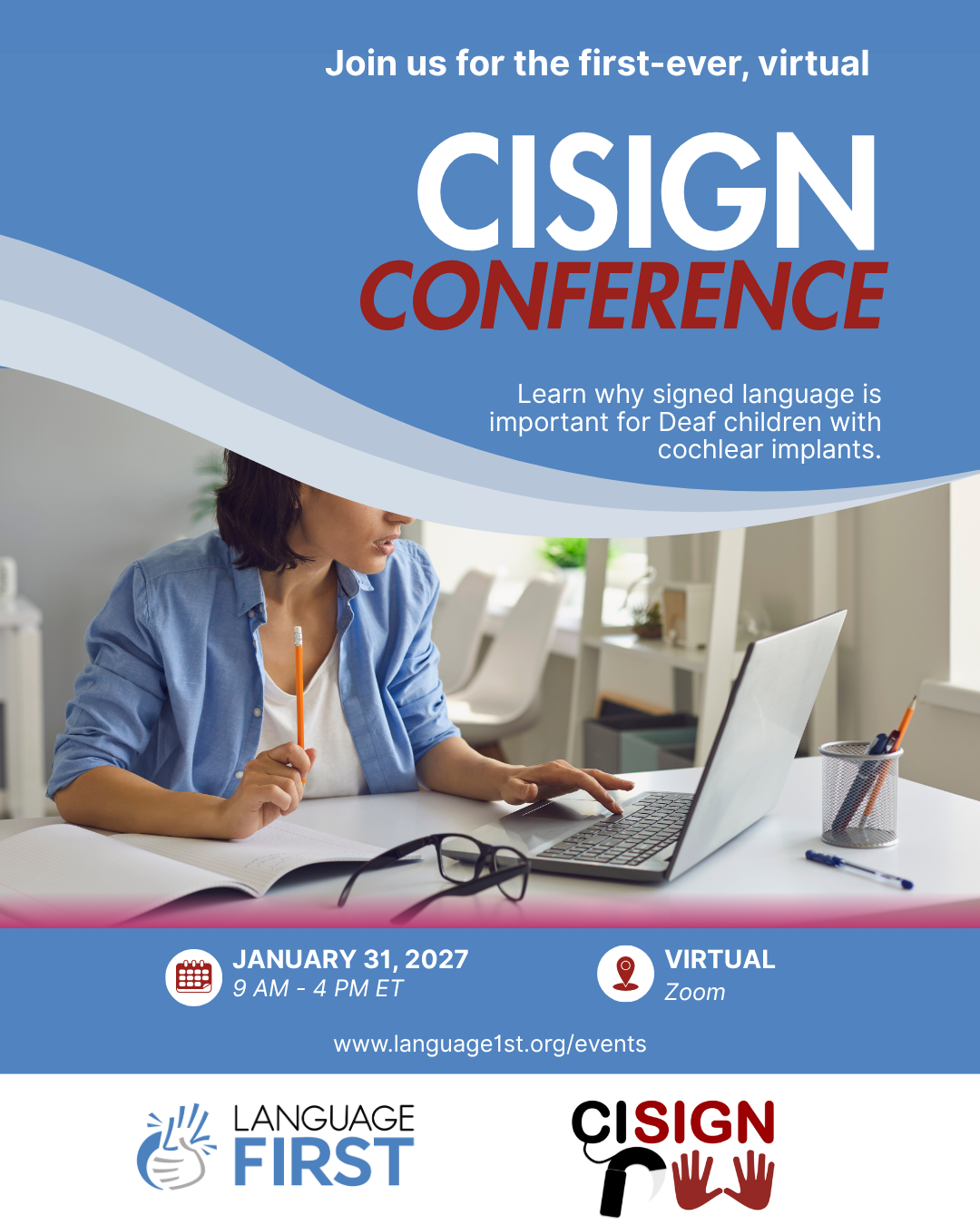 Image 2 of 9
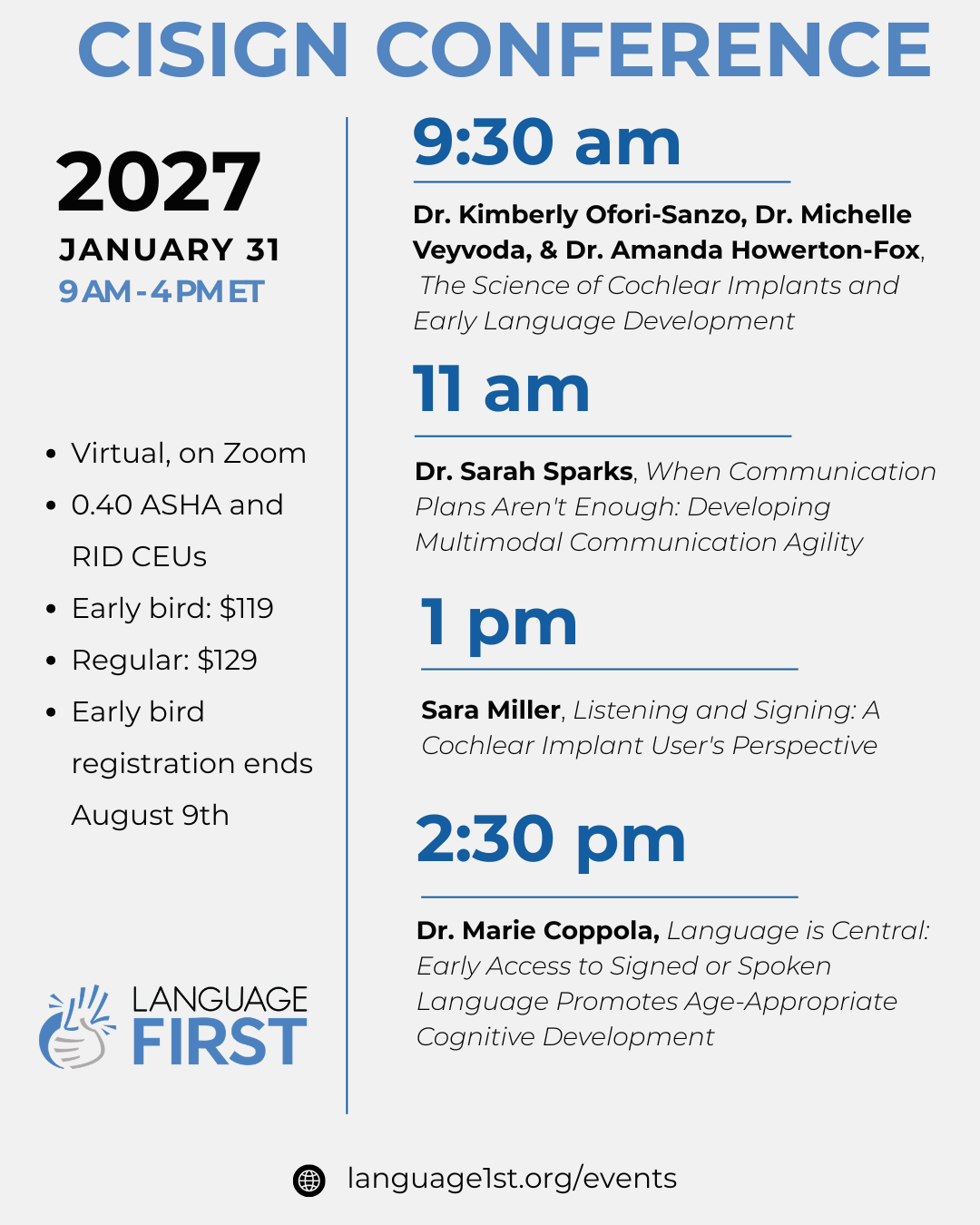 Image 3 of 9
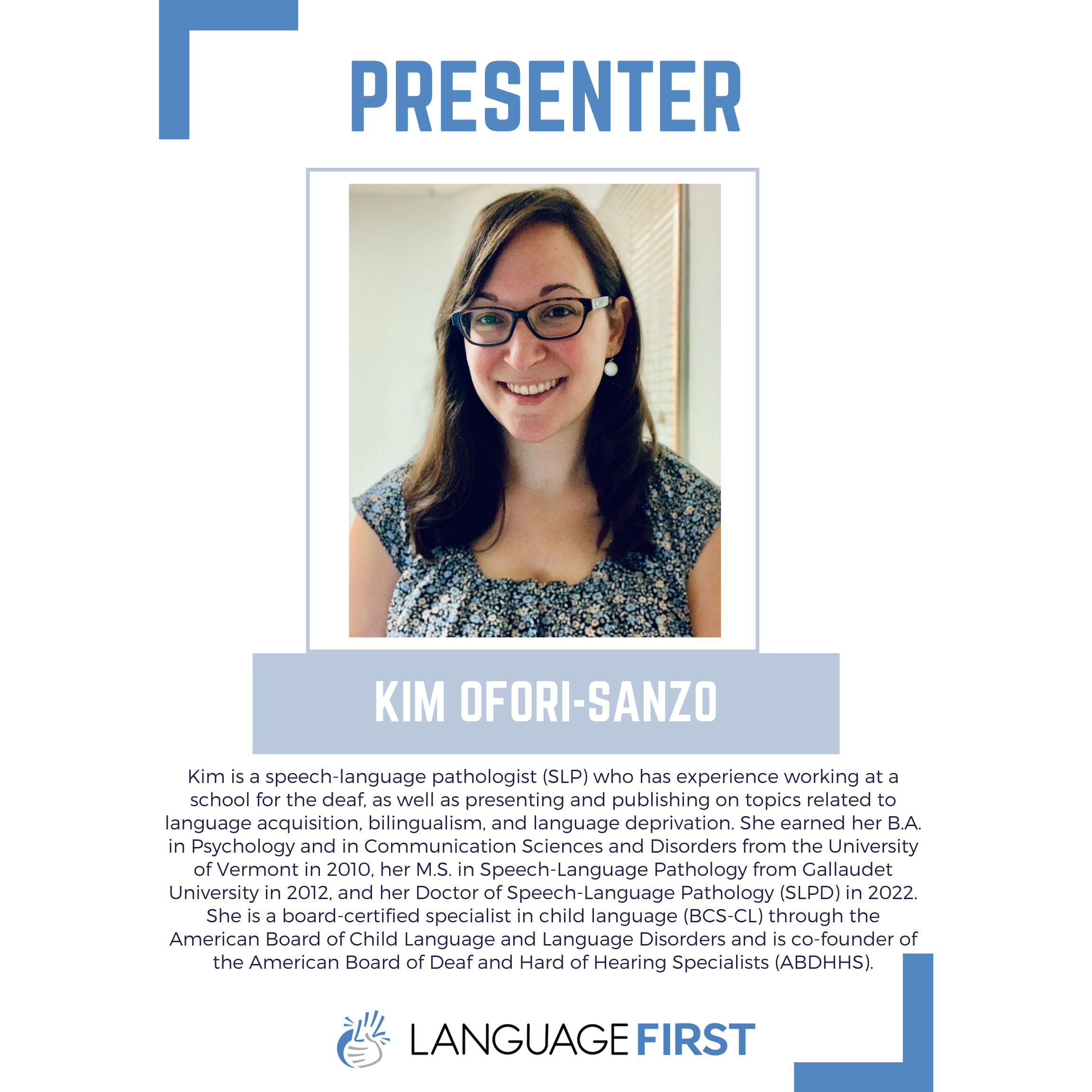 Image 4 of 9
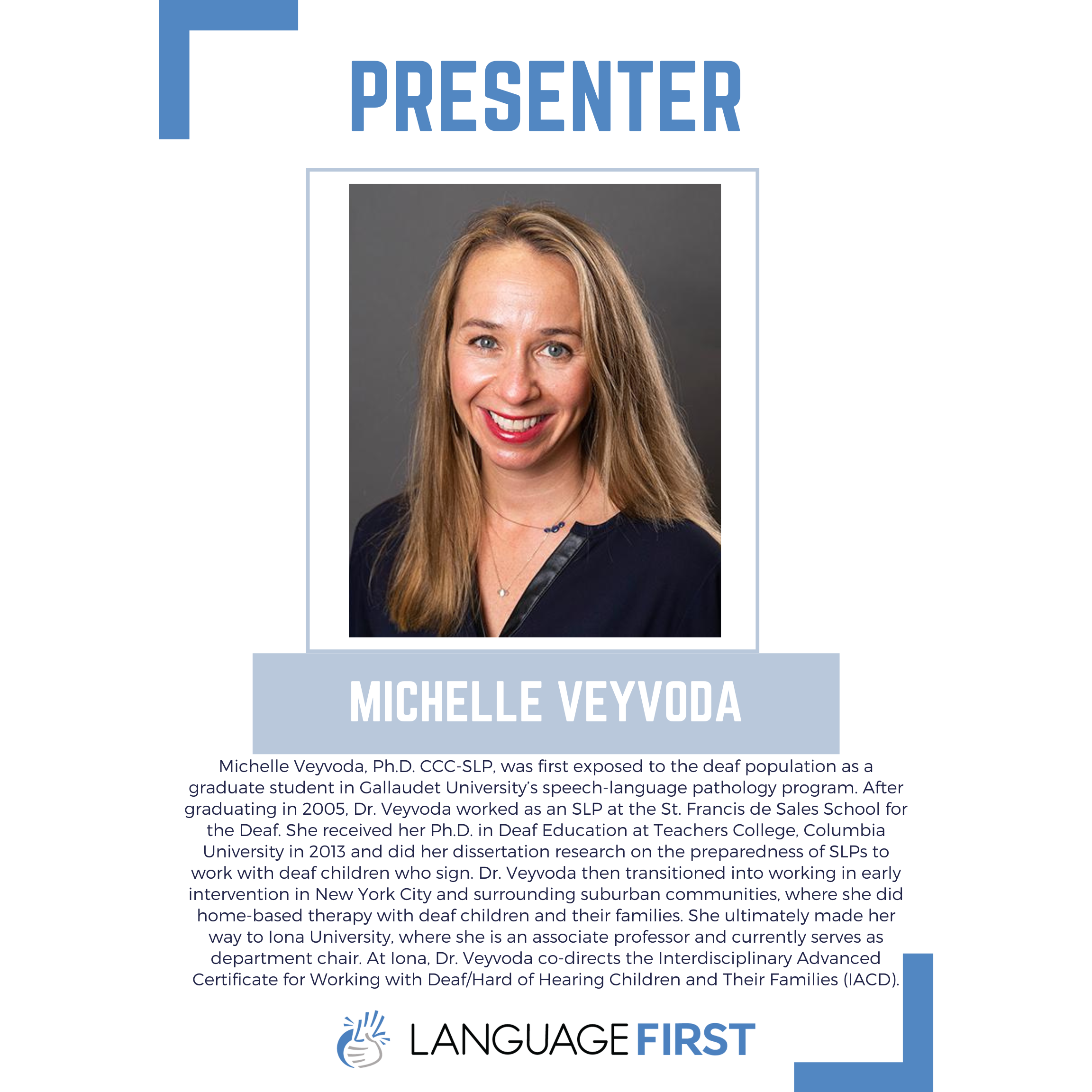 Image 5 of 9
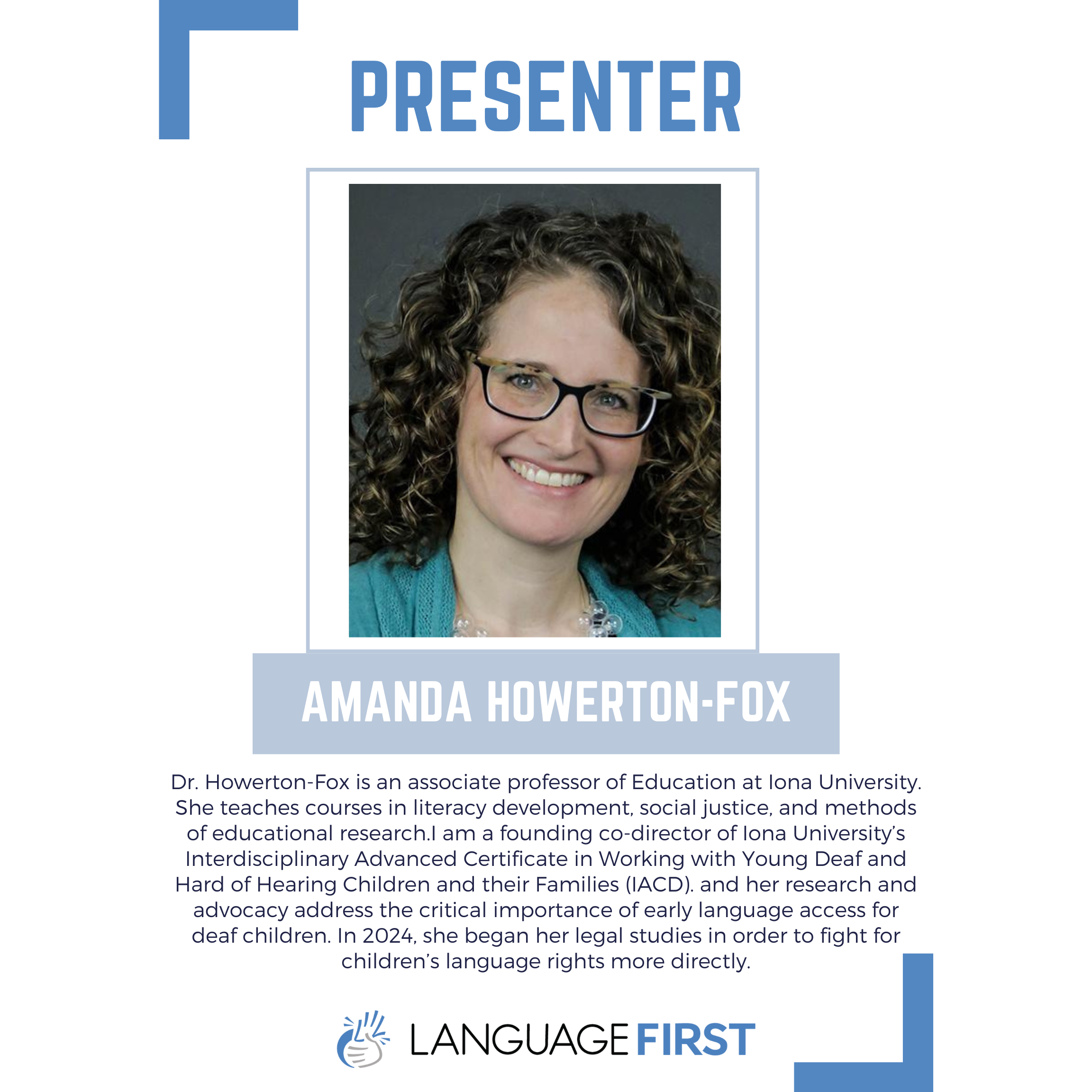 Image 6 of 9
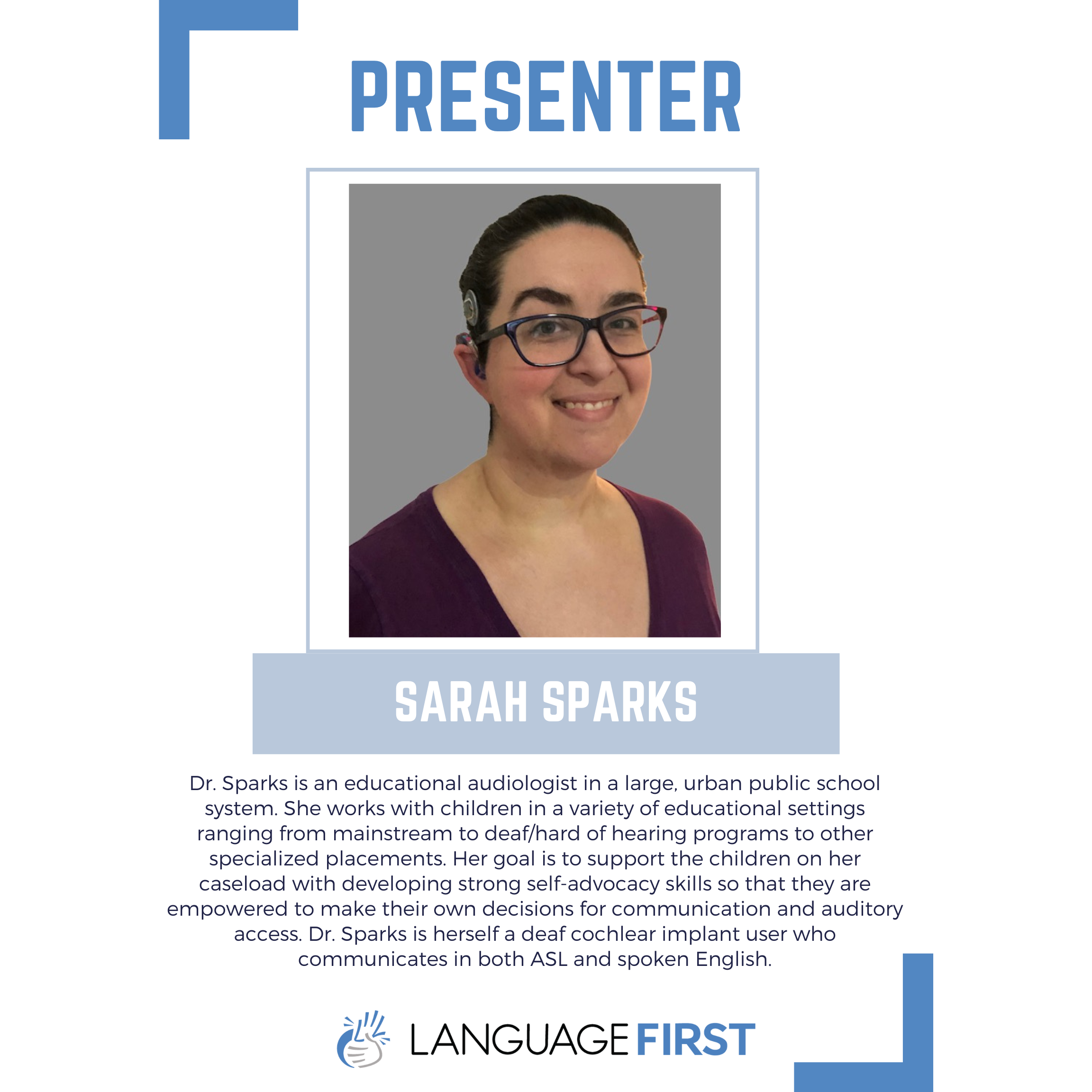 Image 7 of 9
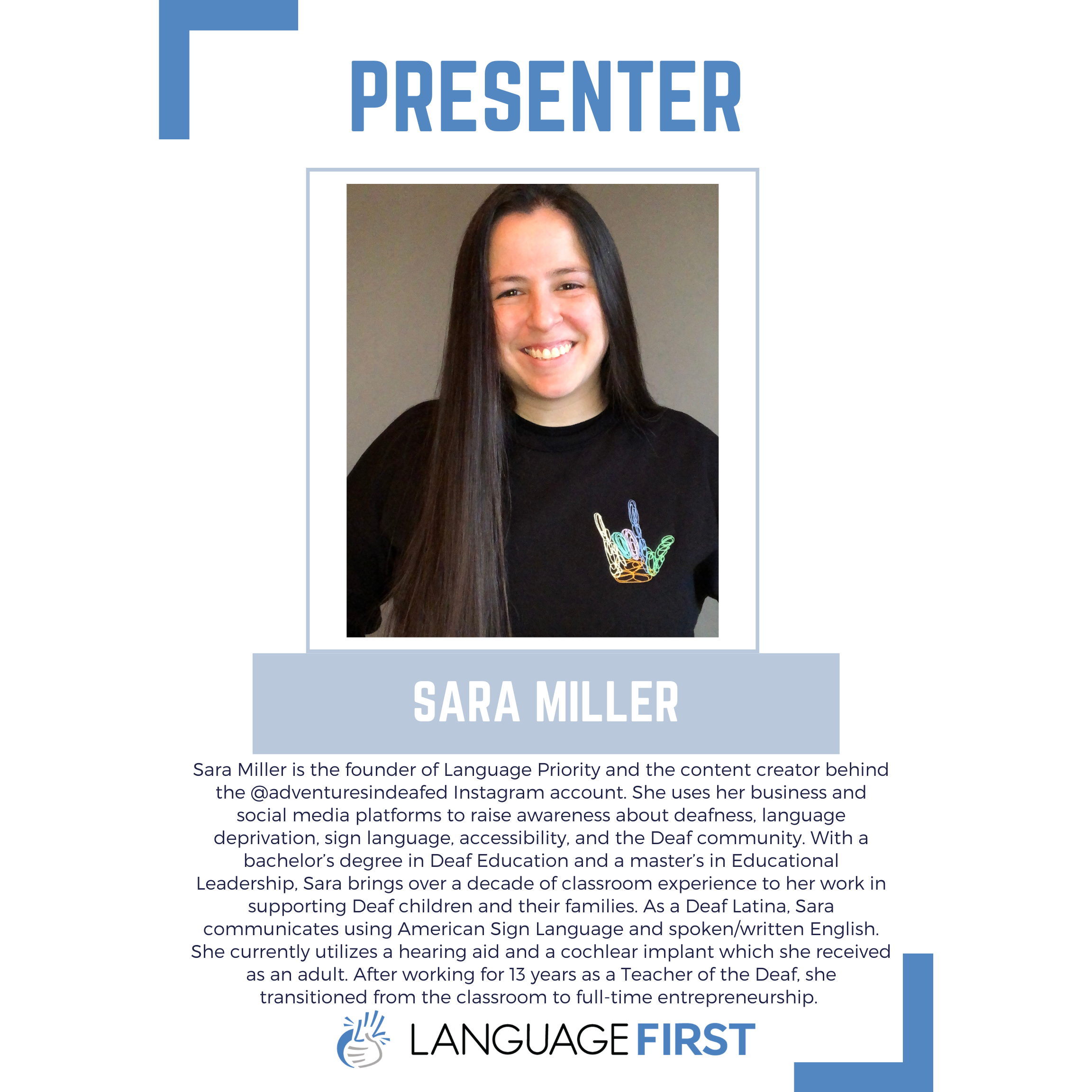 Image 8 of 9
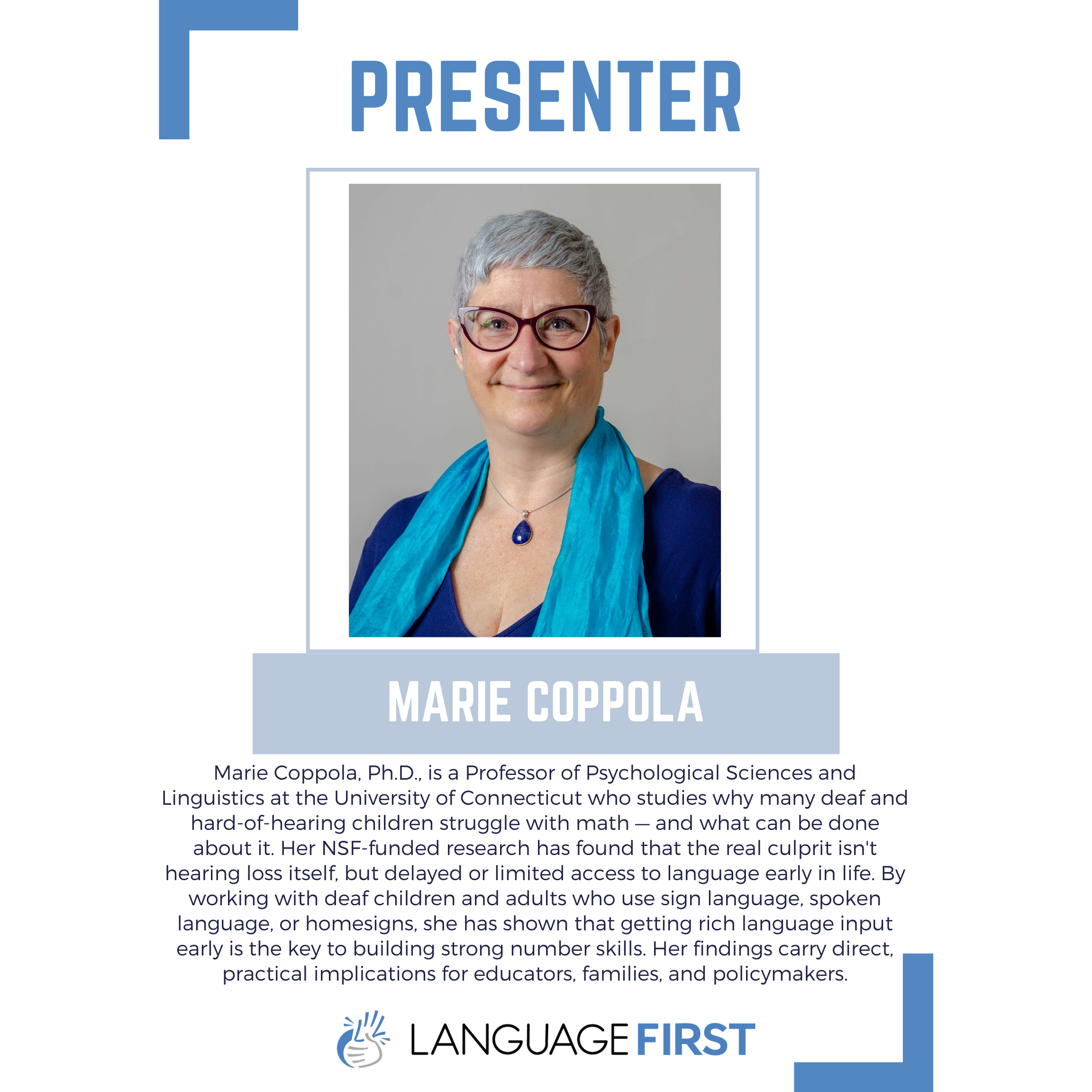 Image 9 of 9