This webinar will be hosted via Zoom for national and international attendees on Monday, July 27, 2026 from 6:00 - 8:00 pm ET.
Speaker Disclosures:
Financial disclosures: Karen, Julie, Christina, and Courtney receive salaries from CCCBSD.
Nonfinancial disclosures: Karen is Board president of Hands & Voices HQ. Julie, Christina, and Courtney have no relevant non financial disclosures.
Course Description:
The Children’s Center for Communication/Beverly School for the Deaf is recognized for its expertise in educating deaf and hard of hearing children with additional needs. Building on this foundation, the school developed an innovative, inclusive bilingual, multimodal early childhood program grounded in evidence-based practices, family-centered principles, and expertise in ASL, spoken language development, and multimodal approaches to language learning. The program is guided by the understanding that language development is not linear and that each child’s language journey is unique. The program features three interconnected classrooms offering ASL, spoken language, and multimodal learning environments. Families identify their child’s initial placement, while children are encouraged to move between classrooms and language environments based on interest and engagement. This flexible structure supports agency, confidence, and individualized language exploration. Ongoing assessment and data collection are used to monitor progress, inform instruction, and support collaborative decision-making with families. This presentation will examine the design and implementation of the program, including language planning, family engagement, interdisciplinary collaboration, classroom structure, and assessment practices. Presenters will share lessons learned, examples of student growth, and parent perspectives through video testimonials. Participants will gain practical strategies for creating flexible, inclusive early childhood environments that support individualized language development, social-emotional growth, and Kindergarten readiness.
Agenda
6:00-6:20: Introduction and historical and parent perspectives
6:20-7:00: Bilingual multimodal classroom structure
7:00-7:20: Morning Meeting and Center Time
7:20-7:30: Assessments -
7:30-7:35: Parent Perspective
7:35-7:45: Closing
7:45-8:00: Q&A
Learner Outcomes:
Participants will be able to:
Describe the core components of a bilingual-bimodal or multimodal early childhood program for deaf and hard-of-hearing children, including the integration of ASL, spoken language, Deaf Culture, and inclusive practices
Identify strategies for creating family-centered programming that honors family choice, child choice, and individualized communication pathways
Examine how interdisciplinary Deaf/hearing teams can collaborate to design classroom environments, staffing models, curriculum, and assessment systems that support language, developmental, and social-emotional growth
Registration information:
This is a digital purchase only; no physical ticket is provided. A form will populate for you to complete your registration and then your purchase will be added to your cart in the upper right-hand corner of the screen. You will receive an email with instructions on how to participate as well as a Google Calendar invite with the Zoom link one week prior to the event. Registration ends one day prior to the webinar. All registrants will receive a copy of the presenter’s PowerPoint and the presentation recording. Please email info@language1st.org with any questions.
This webinar will be hosted via Zoom for national and international attendees on Monday, July 27, 2026 from 6:00 - 8:00 pm ET.
Speaker Disclosures:
Financial disclosures: Karen, Julie, Christina, and Courtney receive salaries from CCCBSD.
Nonfinancial disclosures: Karen is Board president of Hands & Voices HQ. Julie, Christina, and Courtney have no relevant non financial disclosures.
Course Description:
The Children’s Center for Communication/Beverly School for the Deaf is recognized for its expertise in educating deaf and hard of hearing children with additional needs. Building on this foundation, the school developed an innovative, inclusive bilingual, multimodal early childhood program grounded in evidence-based practices, family-centered principles, and expertise in ASL, spoken language development, and multimodal approaches to language learning. The program is guided by the understanding that language development is not linear and that each child’s language journey is unique. The program features three interconnected classrooms offering ASL, spoken language, and multimodal learning environments. Families identify their child’s initial placement, while children are encouraged to move between classrooms and language environments based on interest and engagement. This flexible structure supports agency, confidence, and individualized language exploration. Ongoing assessment and data collection are used to monitor progress, inform instruction, and support collaborative decision-making with families. This presentation will examine the design and implementation of the program, including language planning, family engagement, interdisciplinary collaboration, classroom structure, and assessment practices. Presenters will share lessons learned, examples of student growth, and parent perspectives through video testimonials. Participants will gain practical strategies for creating flexible, inclusive early childhood environments that support individualized language development, social-emotional growth, and Kindergarten readiness.
Agenda
6:00-6:20: Introduction and historical and parent perspectives
6:20-7:00: Bilingual multimodal classroom structure
7:00-7:20: Morning Meeting and Center Time
7:20-7:30: Assessments -
7:30-7:35: Parent Perspective
7:35-7:45: Closing
7:45-8:00: Q&A
Learner Outcomes:
Participants will be able to:
Describe the core components of a bilingual-bimodal or multimodal early childhood program for deaf and hard-of-hearing children, including the integration of ASL, spoken language, Deaf Culture, and inclusive practices
Identify strategies for creating family-centered programming that honors family choice, child choice, and individualized communication pathways
Examine how interdisciplinary Deaf/hearing teams can collaborate to design classroom environments, staffing models, curriculum, and assessment systems that support language, developmental, and social-emotional growth
Registration information:
This is a digital purchase only; no physical ticket is provided. A form will populate for you to complete your registration and then your purchase will be added to your cart in the upper right-hand corner of the screen. You will receive an email with instructions on how to participate as well as a Google Calendar invite with the Zoom link one week prior to the event. Registration ends one day prior to the webinar. All registrants will receive a copy of the presenter’s PowerPoint and the presentation recording. Please email info@language1st.org with any questions.

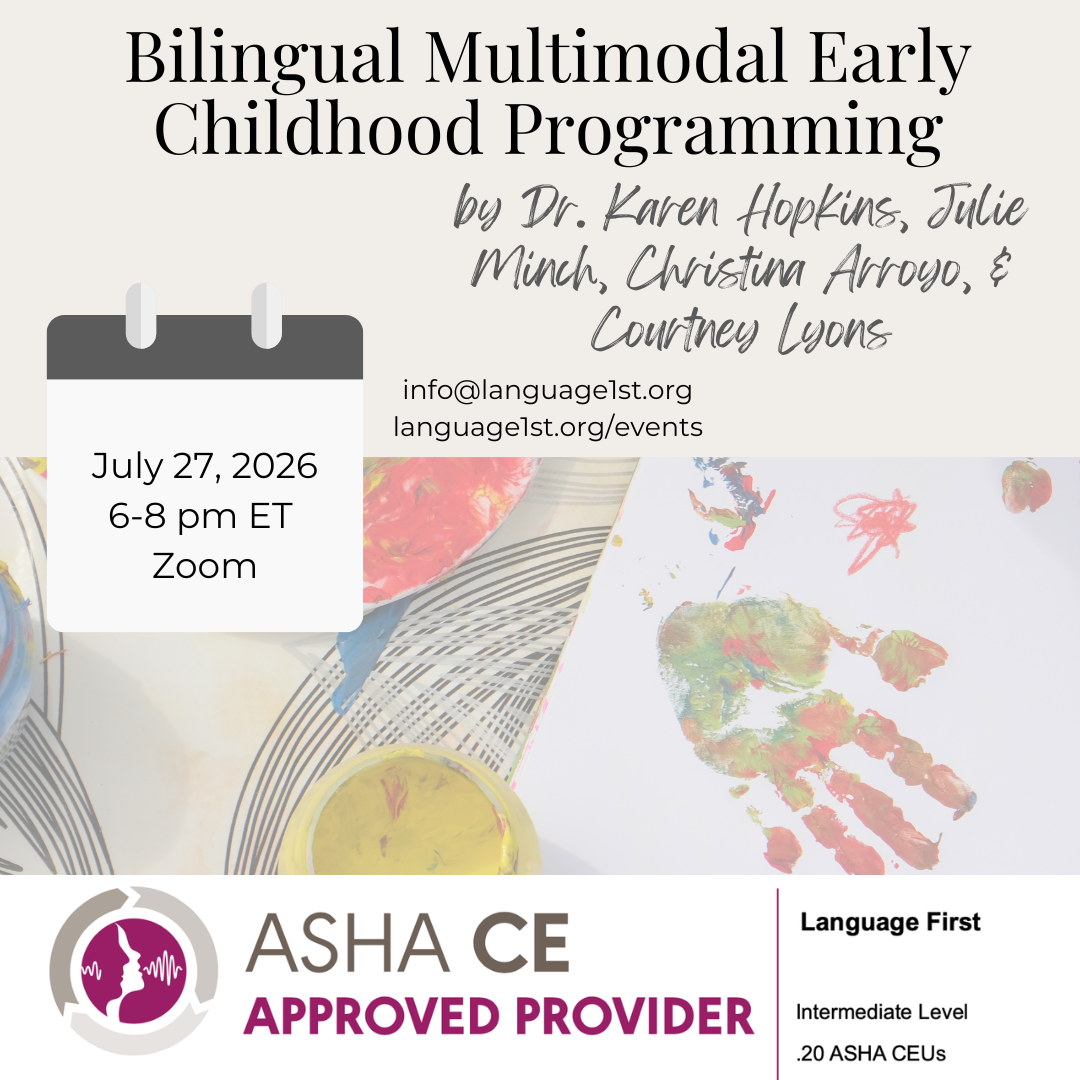 Image 1 of 5
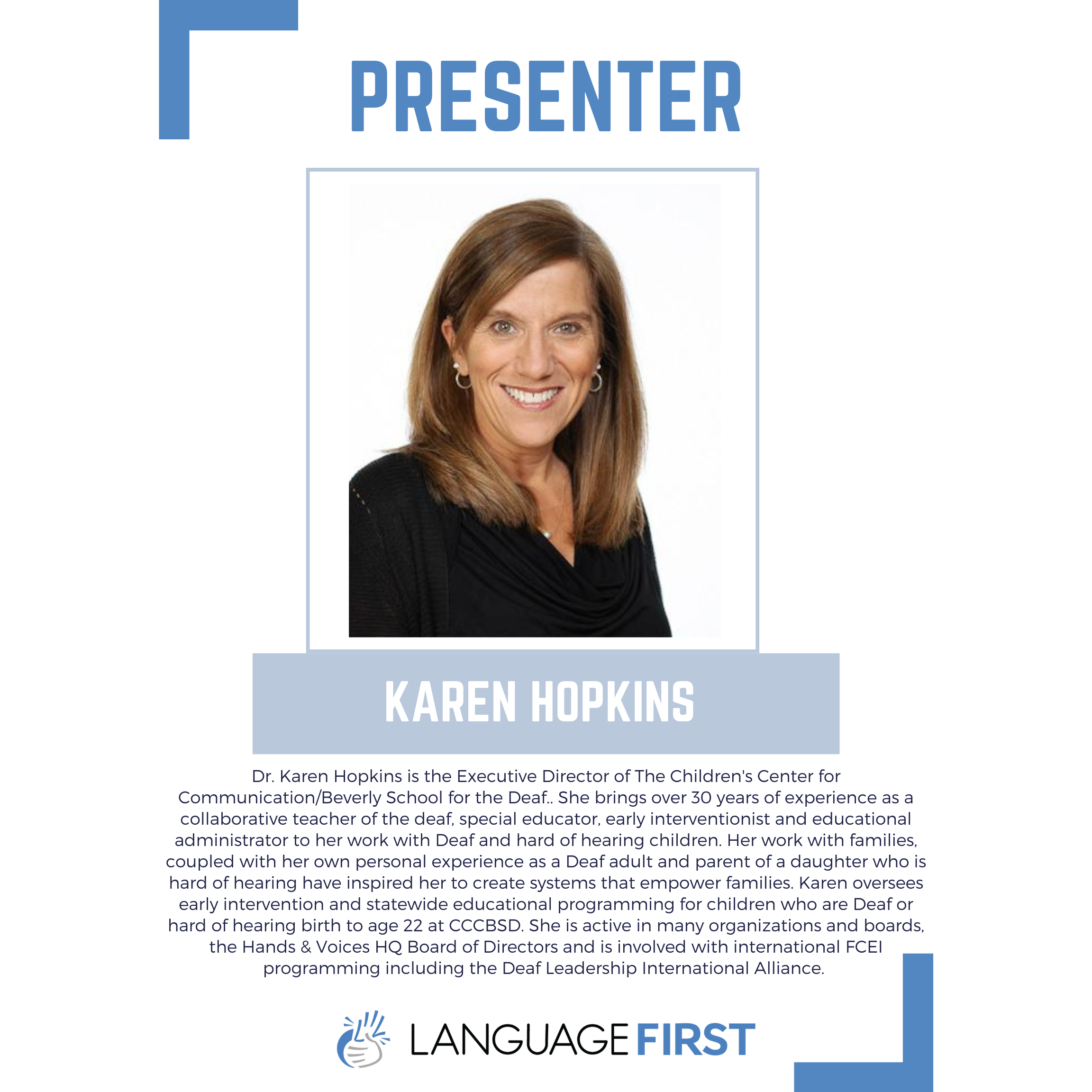 Image 2 of 5
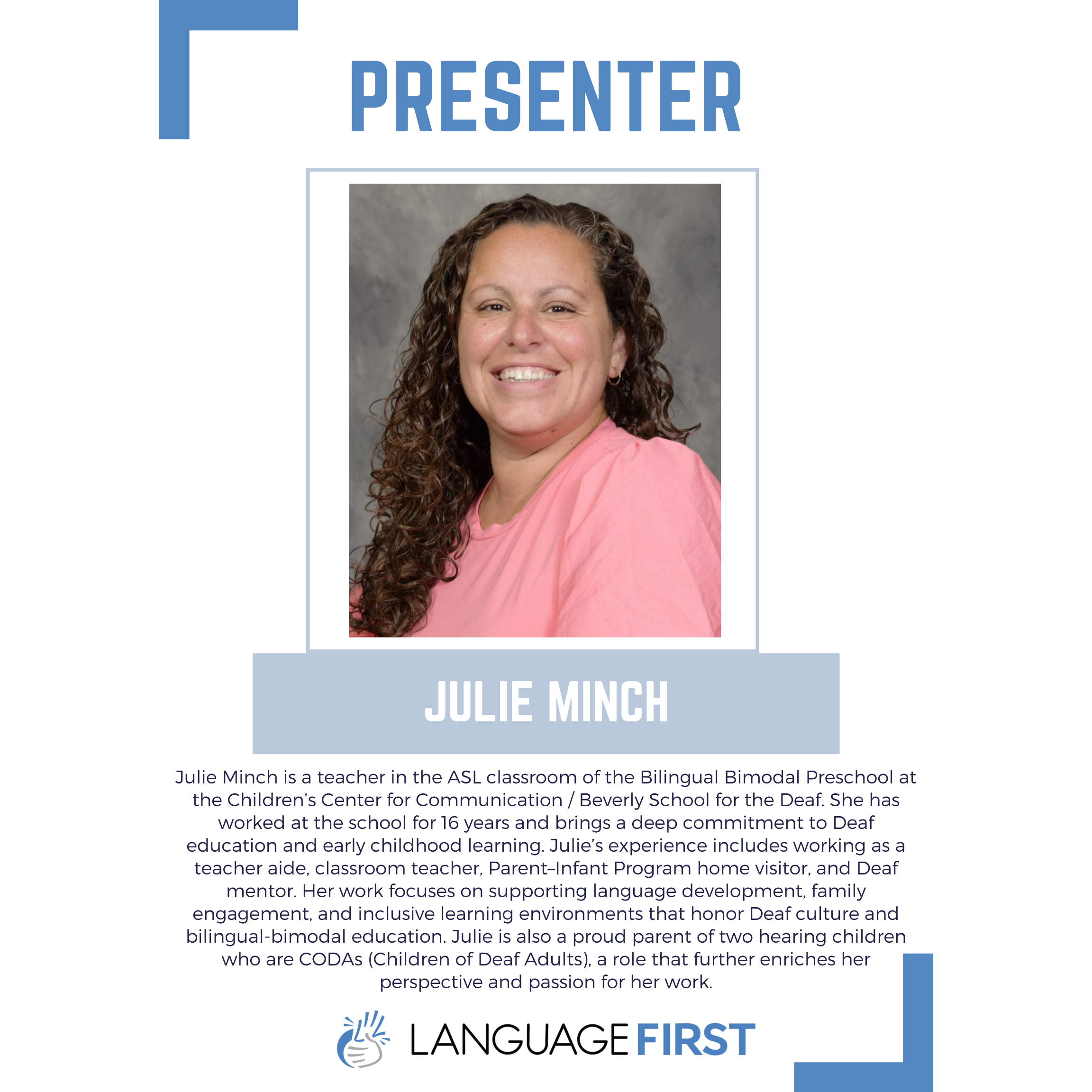 Image 3 of 5
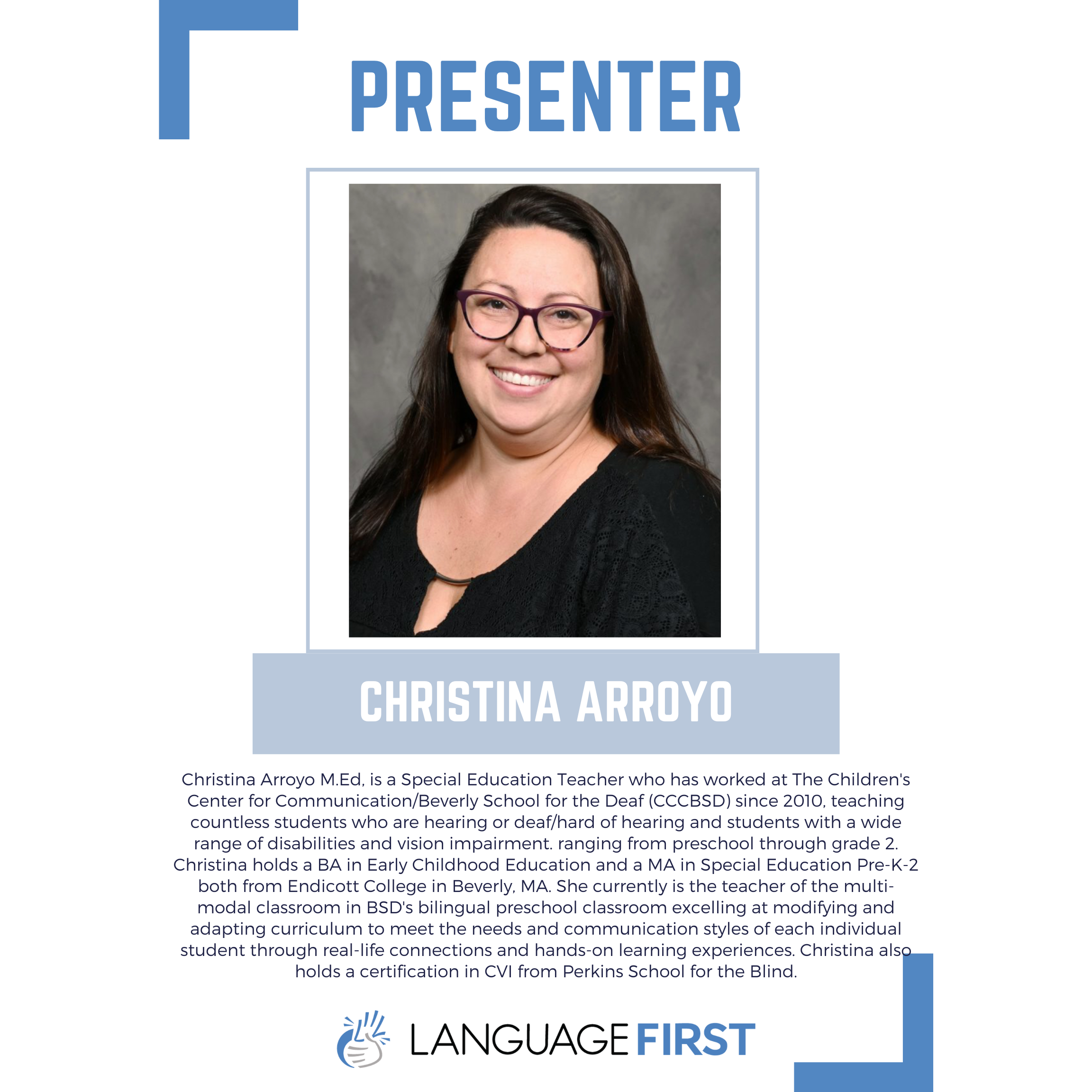 Image 4 of 5
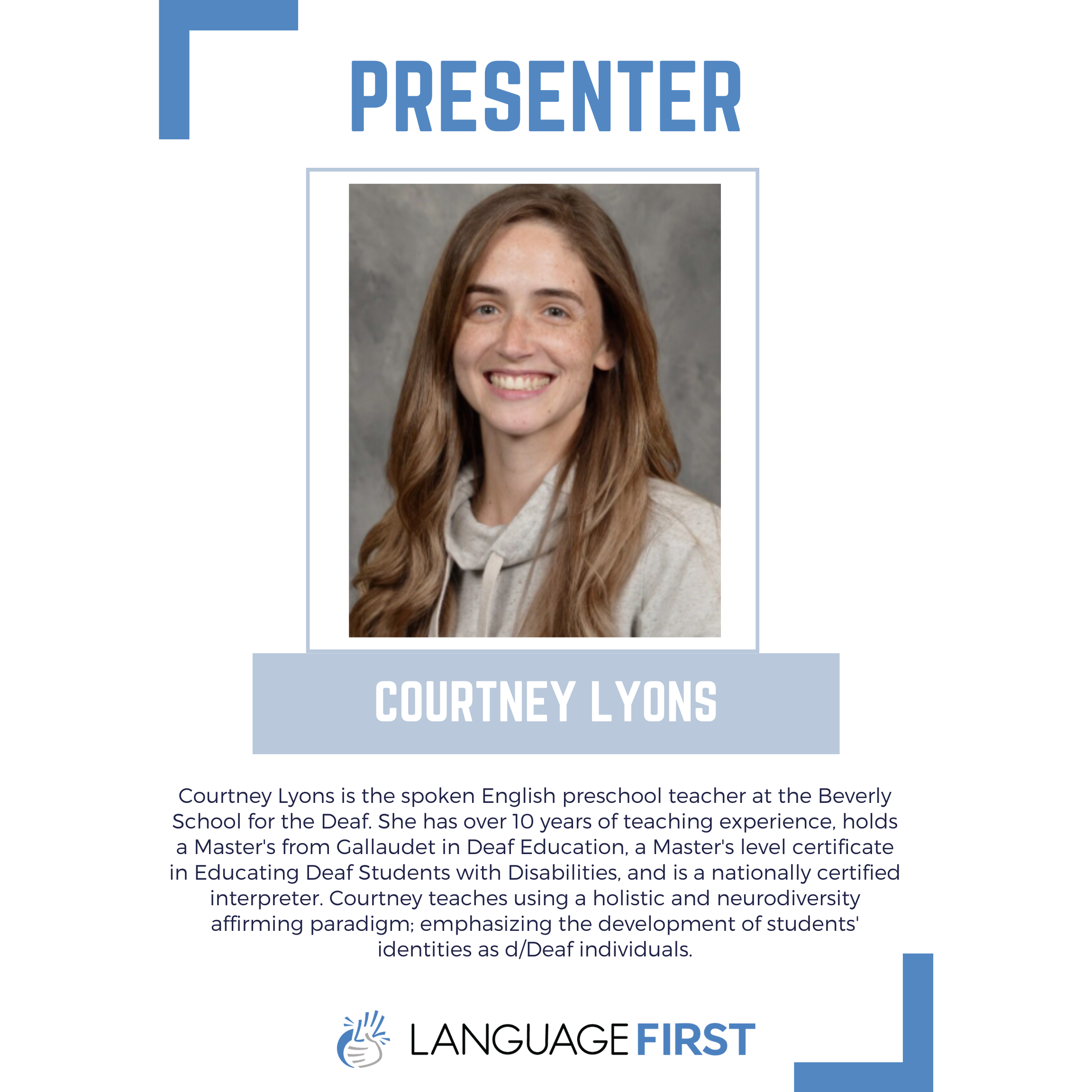 Image 5 of 5